
Worst-case Technological Scenarios for 2016: from A.I. Disaster to First DIY Pathogen


The futurist Ian Pearson, in his fascinating blog The More Accurate Guide to the Future, has recently directed my attention to a new report by Bloomberg Business. Just two days ago, Bloomberg Business published a wonderful short report that identifies ten of the worst-case scenarios for 2016. In order to write the report, Bloomberg’s staff has asked –

“…dozens of former and current diplomats, geopolitical strategists, security consultants, and economists to identify the possible worst-case scenarios, based on current global conflicts, that concern them most heading into 2016.”

I really love this approach, since currently many futurists – particularly the technology-oriented ones – are focusing mainly on all the good that will come to us soon enough. Ray Kurzweil and Tony Seba (in his book Clean Disruption) are forecasting a future with abundant energy; Peter Diamandis believes we are about to experience a new consumerism wave by “the rising billion” from the developing world; Aubrey De-Grey forecasts that we’ll uncover means to stop aging in the foreseeable future. And I tend to agree with them all, at least generally: humanity is rapidly becoming more technologically advanced and more efficient. If these upward trends will continue, we will experience an abundance of resources and a life quality that far surpasses that of our ancestors.

But what if it all goes wrong?

When analyzing the trends of the present, we often tend to ignore the potential catastrophes, the disasters, and the irregularities and ‘breaking points’ that could occur. Or rather, we acknowledge that such irregularities could happen, but we often attempt to focus on the good instead of the bad. If there’s one thing that human beings love, after all, it’s feeling in control – and unexpected events show us the truth about reality: that much of it is out of our hands.

Bloomberg is taking the opposite approach with the current report (more of a short article, really): they have collected ten of the worst-case scenarios that could still conceivably happen, and have tried to understand how they could come about, and what their consequences would be.

The scenarios range widely in the areas they cover, from Putin sidelining America, to Israel attacking Iran’s nuclear facilities, and down to Trump winning the presidential elections in the United States. There’s even mention of climate change heating up, and the impact harsh winters and deadly summers would have on the world.

Strangely enough, the list includes only one scenario dealing with technologies: namely, banks being hit by a massive cyber-attack. In that aspect, I think Bloomberg are shining a light on a very large hole in geopolitical and social forecasting: the fact that technology-oriented futurists are almost never included in such discussions. Their ideas are usually far too bizarre and alienating for the silver-haired generals, retired diplomats and senior consultants who are involved in those discussions. And yet, technologies are a major driving force changing the world. How could we keep them aside?


Technological Worse-Case Scenarios

Here are a few of my own worse-case scenarios for 2016, revolving around technological breakthroughs. I’ve tried to stick to the present as much as possible, so there are no scientific breakthroughs in this list (it’s impossible to forecast those), and no “cure to aging” or “abundant energy” in 2016. That said, quite a lot of horrible stuff could happen with technologies. Such as –

  • Proliferation of 3D-printed firearms: a single proficient designer could come up with a new design for 3D-printed firearms that will reach efficiency level comparable to that of mass-manufactured weapons. The design will spread like wildfire through peer-to-peer services, and will lead to complete overhaul of the firearm registration protocols in many countries.
  • First pathogen created by CRISPR technology: biology enthusiasts are now using CRISPR technology – a genetic engineering method so efficient and powerful that ten years ago it would’ve been considered the stuff of science fiction. It’s incredibly easy – at least compared to the past – to genetically manipulate bacteria and viruses using this technology. My worst case scenario in this case is that one bright teenager with the right tools at his hands will create a new pathogen, release it to the environment and worse – brag about it online. Even if that pathogen will prove to be relatively harmless, the mass scare that will follow will stop research in genetic engineering laboratories around the world, and create panic about Do-It-Yourself enthusiasts.
  • A major, globe-spanning A. disaster: whether it’s due to hacking or to simple programming mistake, an important A.I. will malfunction. Maybe it will be one – or several – of the algorithms currently trading at stock markets, largely autonomously since they’re conducting a new deal every 740 nanoseconds. No human being can follow their deals on the spot. A previous disaster in that front has already led in 2012 to one algorithm operated by Knight Capital, purchasing stocks at inflated costs totaling $7 billion – in just 45 minutes. The stock market survived (even if Knight Capital’s stock did not), but what would happen if a few algorithms go out of order at the same time, or in response to one another? That could easily happen in 2016.
  • First implant virus: implants like cardiac pacemakers, or external implants like insulin pumps, can be hacked relatively easily. They do not pack much in the way of security, since they need to be as small and energy efficient as possible. In many cases they are also relying on wireless connection with the external environment. In my worst-case scenario for 2016, a terrorist would manage to hack a pacemaker and create a virus that would spread from one pacemaker to another by relying on wireless communication between the devices. Finally, at a certain date – maybe September 11? – the virus would disable all pacemakers at the same time, or make them send a burst of electricity through the patient’s heart, essentially sending them into a cardiac arrest.


This blog post is not meant to create panic or mass hysteria, but to highlight some of the worst-case scenarios in the technological arena. There are many other possible worst-case scenarios, and Ian Perarson details a few others in his blog post. My purpose in detailing these is simple: we can’t ignore such scenarios, or keep on living our lives with the assumption that “everything is gonna be alright”. We need to plan ahead and consider worst-case scenarios to be better prepared for the future.

Do you have ideas for your own technological worst-case scenarios for the year 2016? Write them down in the comments section!


 

Nano-Technology and Magical Cups

When I first read about the invention of the Right Cup, it seemed to me like magic. You fill the cup with water, raise it to your mouth to take a sip – and immediately discover that the water has turned into orange juice. At least, that’s what your senses tell you, and the Isaac Lavi, Right Cup’s inventor, seems to be a master at fooling the senses.

Lavi got the idea for the Right Cup some years ago, when he was diagnoses with diabetes at the age of 30. His new condition meant that he had to let go of all sugary beverages, and was forced to drink only plain water. As an expert in the field of scent marketing, however, Lavi thought up of a new solution to the problem: adding scent molecules to the cup itself, which will trick your nose and brain into thinking that you’re actually drinking fruit-flavored water instead of plain water. This new invention can now be purchased on Indiegogo, and hopefully it even works.


right cup.jpg
The Right Cup – fooling you into thinking that plain water tastes like fruit.


“My two diabetic parents are drinking from this cup for the last year and a half.” Lavi told me in an e-meeting we had last week, “and I saw that in taste testing in preschool, kids drank from these cups and then asked for more ‘orange juice’. And I told myself that – Wow, it works!”

What does the Right Cup mean for the future?

A Future of Nano-technology

First and foremost, the Right Cup is one result of all the massive investments in nano-technology research made in the last fifteen years.

“Between 2001 and 2013, the U.S. federal government funneled nearly $18 billion into nanotechnology research… [and] The Obama administration requested an additional $1.7 billion for 2014.” Writes Martin Ford in his 2015 book Rise of the Robots. These billions of dollars produced, among other results, new understandings about the release of micro- and nano-particles from polymers, and the ways in which molecules in general react with the receptors in our noses. In short, they enabled the creation of the Right Cup.

There’s a good lesson to be learned here. When our leaders justified their investments in nano-technology, they talked to us about the eradication of cancer via drug delivery mechanisms, or about bridges held by cobwebs of carbon nanotubes. Some of these ideas will be fulfilled, for sure, but before that happens we might all find ourselves enjoying the more mundane benefits of drinking Illusory orange-flavored water. We can never tell exactly where the future will lead us: we can invest in the technology, but eventually innovators and entrepreneurs will take those innovations and put them to unexpected uses.

All the same, if I had to guess I would imagine many other uses for similar ‘Right Cups’. Kids in Africa could use cups or even straws which deliver tastes, smells and even more importantly – therapeutics – directly to their lungs. Consider, for example, a ‘vaccination cup’ that delivers certain antigens to the lungs and thereby creates an immune reaction that could last for years. This idea brings back to mind the Lucky Iron Fish we discussed in a previous post, and shows how small inventions like this one can make a big difference in people’s lives and health.


A Future of Self-Reliance

It is already clear that we are rushing headlong into a future of rapid manufacturing, in which people can enjoy services and production processes in their households that were reserved for large factories and offices in the past. We can all make copies of documents today with our printer/scanner instead of going to the store, and can print pictures instead of waiting for them to be developed at a specialized venue. In short, technology is helping us be more geographically self-reliant – we don’t have to travel anymore to enjoy many services, as long as we are connected to the digital world through the internet. The internet provides information, and end-user devices produce the physical result. This trend will only progress further as 3D printers become more widespread in households.

The Right Cup is another example for a future of self-reliance. Instead of going to the supermarket and purchasing orange juice, you can buy the cup just once and it will provide you with flavored water for the next 6-9 months. But why stop here?

Take the Right Cup of a few years ahead and connect it to the internet, and you have the new big product: a programmable cup. This cup will have a cartridge of dozens of scent molecules, each of which can be released at different paces, and in combination with the other scents. You don’t like orange-flavored water? No problem. Just connect the cup to the World Wide Web and download the new set of instructions that will cause the cup to release a different combination of scents so that your water now tastes like cinnamon flavored apple cider, or any other combinations of tastes you can think of – including some that don’t exist today.


A Future of Disruption?

As with any innovation and product proposed on crowdfunding platforms, it’s difficult to know whether the Right Cup will stand up to its hype. As of now the project has received more than $100,000 – more than 200% of the goal they put up. Should the Right Cup prove itself taste-wise, it could become an alternative to many light beverages – particularly if it’s cheap and long-lasting enough.

Personally, I don’t see Coca-Cola, Pepsi and orchard owners going into panic anytime soon, and neither does Lavi, who believes that the beverage industry is “much too large and has too many advertising resources for us to compete with them in the initial stages.” All the same, if the stars align just right, our children may opt to drink from their Right Cups instead of buying a bottle of orange juice at the cafeteria. Then we’ll see some panicked executives scrambling around at those beverages giants.


Conclusion

It’s still early to divine the full impact the Right Cup could have on our lives, or even whether the product is even working as well as promised. For now, we would do well to focus only on previously identified mega-trends which the product fulfills: the idea of using nano-technology to remake everyday products and imbue them with added properties, and the principle of self-reliance. In the next decade we will see more and more products based on these principles. I daresay that our children are going to be living in a pretty exciting world.


Disclaimer: I received no monetary or product compensation for writing this post.


The Future of Kindness – and the World of Karma

Today is World Kindness Day and that serves as a wonderful starting point for a discussion of where kindness is heading to, and why we’re heading towards a World of Karma: a world filled with infinite kindness – and almost none at all.

In order to understand the future of kindness, we must first take a look at two parallel trends occurring nowadays, and analyze their impact in relation to each other. These trends are the growing Omni-connectivity, and Cognitive Computing. Let’s go quickly over each, and see how they culminate together in a world of infinite kindness.

Omni-connectivity

Omni-connectivity is my definition for a world in which everyone is connected, and everything is known. This world will be brought about by the growing Internet of Things, which connects between every-‘thing’. Every item, every object. From the floor under your feet that counts how many people have walker over it today, to the cement brick in the nearby bridge that senses when the structure is about to fail. Your mirror is also connected to the internet, as is your toothbrush and your comb. And yes, your clothes are all sending data about what’s happening to you every minute and every second of the day.

The Internet of Things is becoming a reality because of the incredible leaps forward in technology. The cost of sensors has gone down by 40% over the last ten years, while the costs of bandwidth and processing have gone down by 4,000% and 6,000% respectively over the same period of time. By the year 2020 – just five years ahead – there are expected to be 28 billion ‘things’ connected to the internet, and the number is only expected to grow larger after that.

In the Internet of Things era, everything that happens in the physical world is recorded, uploaded to the cloud as data and analyzed by computers. Very few people, if any, can remain invisible or under the shroud of anonymity. Everything you do is analyzed, quantified and catalogued in vast databases.

Cognitive Computing

The other piece of the puzzle is the growing capability of cognitive computing. Today, we are beginning to teach computers by training them: we’re showing them images of many cats so that they can gain an understanding for what a cat is, for example. Many of these computers are based on the workings of the human brain, making use of artificial neural networks, so it should come as no surprise that they can be taught basic concepts, imageries and even to play games just by seeing human beings playing them.

Computers are already better than human beings at image recognition, and it won’t take them long (probably less than two decades) to be just as proficient as human beings are at analyzing video clips as well. The computers of the near future won’t simply look for cats in videos, but instead they will focus on human emotions: are the people in the video clip happy? Are they sad, or just frustrated?

And this will just be the beginning.

Recall that in the omni-connected world, we are all monitored all the time by wearable computers that are listening to our heart beats, recording our temperature and voices, measuring our activity and the food that we eat, and everything in between. All of this data is uploaded to the cognitive computers who can determine what’s going on with our lives at any distinct moment. They can know where we are, what we do, and even how we feel about it: whether we are sad, sexually aroused, or anything in-between.

The World of Karma

We already have apps today that try to quantify kindness and good deeds, and pay you back for them. The only problem is that they’re extremely reliant on the jurisdiction of human beings, and that most people feel very uncomfortable asking for someone else to rate that kind deed they did. Or they can just lie and report from their bed that they just saved the world three times over. These challenges are difficult to overcome without some kind of a ‘god’ overlooking us all and quantifying our actions.

Now let’s call this ‘god’ an omni-computer, in an omni-connected world.

In an omni-connected world which is constantly analyzed by computers, the doings of every individual are recorded and compared to the direct impact they have on other the lives of everyone else. If I stop to help someone whose car is stuck at the side of the road, the omni-computer up above knows I performed a good deed because of the beneficial effect it had on the physiology of that poor guy I helped. And when I insult someone on the street, it similarly knows I just acted negatively. Now we only have to program the algorithms that will make the omni-computer repay my kindness.

In the world of the future, then, whenever I stop to give a helping hand to a stranger, I can know for certain that my deed is recorded, and that I will receive some kind of help in the near future in return. I may walk in the market place, feel hot and sweaty, and immediately get handed a cool beverage by a passerby. Or maybe, if I gather enough ‘kindness coins’, I can even receive larger gifts and more substantial aid from strangers. I call it The World of Karma, for obvious reasons.

While I realize such a future world sounds quite weird to us, that doesn’t mean it’s impossible or even improbable. It’s just weird – which makes it a suitable contender as one of the futures that may become real, since a future that looks just like the present is almost certainly a comforting lie that we tell ourselves.

I would like to leave you with one last thought. In the World of Karma, people’s kindness can be an enormous force for good, since everyone knows that every act of kindness is recorded, counted and will aid them in return at some point in the future. And yet, is this true kindness? Altruistic kindness, after all, is based on the idea that people help each other without expecting a return. Can such altruistic kindness exist in a world where every deed has a value, and “no good deed goes unpaid”?

And if so, is that such a bad thing?

The Future of Evil in the Mixed-Reality World

I was playing World of Warcraft – the famous Massive Multiplayer Online Role Playing Game (MMORPG) – last night, and became a member of a party of five players in order to complete a challenging dungeon. Normally, journeying together with four other people in a virtual world can be heaps of fun. The warriors hit monsters, the healers heal the warriors, and everybody is having fun together.

Well, not this time.

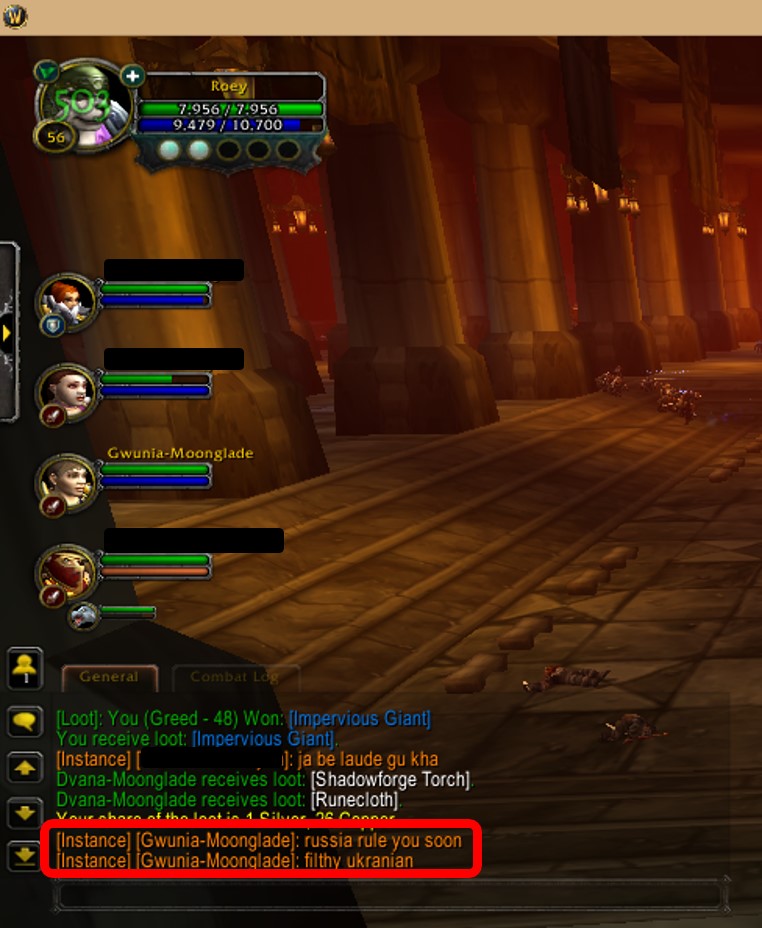
Halfway through the dungeon, one of the players began spouting some national slurs – “Russia rule you soon”, for one, and “Filthy Ukranian” among others. The response was pretty immediate – after a minute or two of shock, the offending player was kicked out of the party. We found another player in less than a minute and completed the dungeon at our leisure. The remarks, though, left an impression on me and made me think all through the evening about an interesting question: why don’t we see more breaches and break-ins from the physical world into the virtual one?

National slurring personally experiences in World of Warcaft

Virtual Worlds

Perhaps the term “virtual worlds” needs to be better defined. After all, Facebook too is a virtual world, and we see people bringing their problems and biases from the physical world into Facebook all the time. World of Warcraft, though, much like other MMORPGs, is a different virtual world. It’s a simulation, in fact, of a fantasy world filled with dragons, dungeons and real monsters who would like nothing more than to chew on your virtual bones.

This detachment from reality is probably the most important difference between MMORPGs and Facebook: on Facebook, you’re supposed to ‘play’ yourself and emphasize your views on the physical world. MMORPGs, however, are viewed more as vacation-time from reality. You go to MMORPGs to escape the conflicts of the physical world, not to accentuate them. This common understanding among players helps ensure that few incursions between the two worlds occur.

It is also my belief (and I don’t know any research to support it, since the field of MMORPGs has largely been ignore by political and social scientists) that MMORPGs bring into the equation something that we humans sorely lack in the modern ages: an evil enemy. Namely, I’m speaking of the computer that is controlling the world and the monsters in it. Those monsters will kill you if you don’t get strong enough. They are the ultimate evil – they can’t be reasoned with, and you can’t deliberate with them. It’s a kill or be killed environment, in which you have to become stronger constantly just to survive.

Compare this black and white environment to the one we experience in the physical world. In past times, tribal and national leaders tried to paint their enemies with a good vs. evil color palette. Namely: we’re the good guys, and they’re the bad guys. This kind of stereotyping doesn’t really work so well anymore, now that you can read everywhere about the woes and dilemmas of the other side, and realize that they’re humans just like you are. But realizing and accepting this fact requires conscious effort – it’s so much easier to hate, demonize and vilify the other side!

What wonder, then, that players are so happy leaving behind the grey national animosities of the physical world, and fight the good fight in the virtual worlds?

Meaning for the Future

These thoughts are pretty preliminary and shallow, and I post them here only because they are important for our future. In a decade or two from now we will enter a world in which the virtual and the physical aspects become mixed together constantly. As I wrote in an earlier post, wearable augmented reality devices are going to transform every street and every walking lane into a dungeon or a grassland field filled with monsters and treasure.

The virtual world is different from the physical one in many aspects, but one of the most important is that virtual wealth is infinite and priceless. One can find enormous treasures in the virtual world, beat his virtual computer-controlled opponents time after time, and in the future also enjoy virtual love (or at least sex) with virtual entities.

But what is the meaning of life in a virtual world? And since we’re about to experience a mixed-reality world soon, we must also consider: how do we keep on providing meaning and motivation to everyone in it?

It is possible that, based on the lessons of World and Warcraft and other MMORPGs, the programmers of the mixed-reality world will put an emphasis on the creation of true evil: of evil ghosts and dragons, and a perpetual fight for (virtual) survival against those. Maybe then, when we’re confronted by a greater enemy, we’ll be able to overlook our religious, national and racial biases and come together to fight the good fight in a game that will span nations and continents.

Does the future of mixed-reality holds dragons in store for us all, then? One can only hope.

Bionic Ears and Microphone Fingernails – Oh My!

Everywhere you go, you can find scientists and engineers doing 3-D printing. They may be using it to print bridges over water, or buildings and houses, or even hearts and livers and skull parts. In fact, we’re hearing so much about 3-D printers creating the normal and ordinary stuff all over again, that it’s becoming pretty boring.

This, of course, is how technology makes progress: slowly, and with iterative changes being added all the time. We’re currently using 3-D printers just to create all the old stuff, which we’re used to. The makers and creators are mainly interested today in demonstrating the capabilities of the printers, and put less emphasis on actually innovating and creating items that have never existed before, and of course, the clients and customers don’t want anything too extraordinary as well. That’s the reason we’re 3-D printing a prosthetic ear which looks just like a normal ear, instead of printing a Vulcan ear.

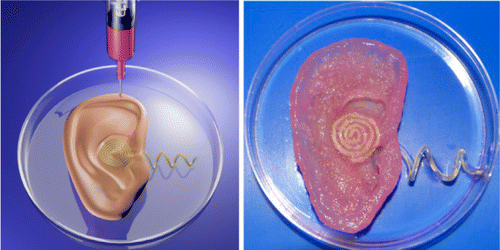
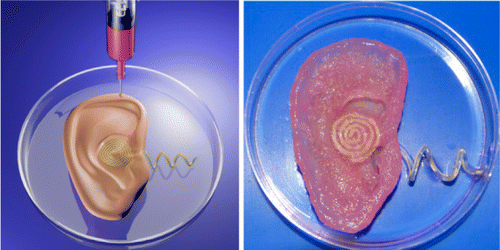
What happens if we let go of the ordinary and customary, and begin rethinking and reimagining the items and organs we currently have? That’s just what Manu S. Mannoor, Michael C. McAlpine and their groups did in Princeton and Johns Hopkins Universities. They made use of a 3-D printer to create a cartilage tissue the shape of a human hear, along with a conductive polymer with infused silver nano-particles. The end result? A bionic ear that should look and feel just like an ordinary ear, but has increased radio frequency reception. It is not far-fetched to say that Mannoor and McAlpine have printed the first biological ear that could also double as a radio receiver.

Mannoor, McAlpine and team's 3D-printed bionic ear, with enhanced radio reception capabilities. Originally from paper "3D Printed Bionic Ears"
Mannoor, McAlpine and team’s 3D-printed bionic ear, with enhanced radio reception capabilities.
Originally from paper “3D Printed Bionic Ears

Where else may we see such a combination between the biological and the synthetic? This is a fascinating thought experiment, that could help us generate a few forecasts about the future. If I had to guess, I would venture a few combinations for the next twenty years –

  • Radio-conductive bones: have you come for a hip replacement, and also happen to have a pacemaker or some other implant? The researchers will supply you with a hip-bone printed specifically for you, which will also contain conductive elements that will aid radio waves go deeper into the body, so that the implants can receive energy more easily from the outside by radio waves or induction of some kind.
  • Drug delivering tattoos: this item is not 3-D printed, but it’s still an intriguing combination of a few different concepts. Tattoos are essentially the result of an injection of nano- and micro-particles under the skin. Why not use specific particles for added purposes? You can create beautiful tattoos of dragons and princesses and butterflies that can also deliver medicine and insulin to the bloodstream, or even deliver adrenaline when pressed or when experiencing a certain electrical field that makes the particles release their load. Now here’s a tattoo that army generals are going to wish their soldiers had!
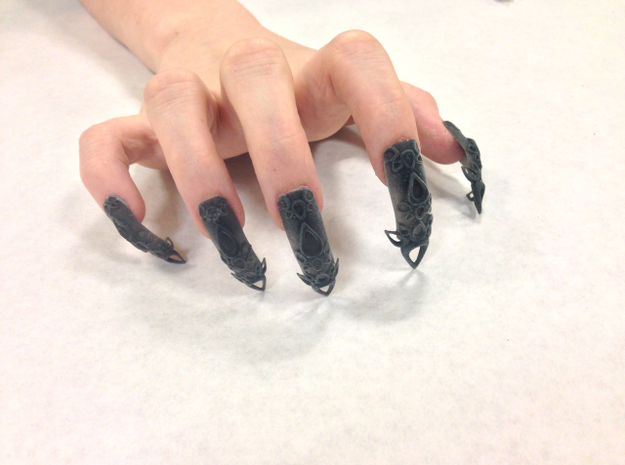
  • Exquisite fingernails: the most modern 3-D printers come with a camera and A.I. built-in, so that they can print straight on existing items that the user places in the printer. Why don’t we make a 3-D printer that can print directly on fingernails with certain kinds of materials? The fingernails of the future – which will be printed anew every day – might contain tiny batteries that will power smartphones by touch, or microphones that could record everything that happens around the user.
3D printed fingernails by TheLaserGirls. Offered for sale on Shapeways.

These are obviously just three rudimentary ideas, but they serve to show what we could gain by leaving behind the idea that new manufacturing technologies should adhere to the “old and proven”, and advance ahead to novel utilities.

In the end, the future is never just “same old same old”, but is all about shedding off the customs of the past and creating new ones. And so, if I had to guess, I would wager that such a unification of concepts into new and bizarre devices would give us a much more accurate view of the future than the one we gain in the present by showing how 3-D printers can build yet another house and another human organ.

What are your ideas for future combinations of biological and synthetic components? Write them down in the comments section!

China is Implementing a Social Rating System

I loved her, on the spot. There was something in her stance, her walk, her voice. Hesitantly, I approached and opened a light chat. There was an immediate connection, a feeling of rapport between us. Finally, I dared pop the question – “Do you want to meet again tomorrow?”

She went quiet for a second, then asked to see my social credit rating. I tried to keep my face still while I took out my smartphone and showed it to her.

She went quiet for more than a few seconds…


This system – a social credit rating – is in the process of being created and implemented today in China. If it works out well, it’s going to have an impact that will spread far beyond the People’s Republic, and may become part of our lives everywhere. Because, you see, this system might actually be a good idea – as long as we use it wisely.

What is a social credit rating? In a way, it’s similar to the ordinary credit history rating being used in America and other countries. Every person in America, for example, has a credit history that speaks volumes about their past behavior, how soon they return their loans, and how they handle their money. When one applies for a new loan, a mortgage or even for a new credit card, the banks and financial institutes take a good hard look at the inquirer’s credit history to decide whether or not they can be safe giving him that loan.

Up until today, only 320 million individuals in China had any kind of credit history, out of 800 million people registered in China’s central bank. Things are about to change, though, since the Chinese government is authorizing several companies to collect and compare information about the citizens, thus creating an omnipotent, omniscient system that assigns a “social credit rating” to anyone who uses any kind of online services, including dating sites like Baihe, and commercial sites like Alibaba.

And the Chinese people are really gobbling it up.

While it’s obviously difficult to know how the common person in the street is responding, it looks like the Chinese companies (again, under close scrutiny and agreement by the government) really know how to sell the idea to their customers. In fact, they’re letting the customers ‘sell’ the idea themselves to their friends, by turning the social credit rating into a game. People are comparing their ratings to each other, and are showing their ratings on their smartphones and their profiles on dating services. For them, it has become a game.

But it is a game with very serious consequences.

Her face fell when she saw my rating. I talked quickly – “I-It’s not what it looks like. You gotta understand, I didn’t have the money to repay Big Joe last week, but now I’m getting all the wages I was owed. Seriously, it’s OK. I’m OK financially. I really am.”


There’s no denying that credit history ratings can serve a positive purpose. They alert individuals and companies to the past history of con artists, scammers and generally unscrupulous people whom you’d rather not have any dealings with. The mere presence of a credit history rating could cause people to trust each other better, and also to behave themselves in their financial dealings. People from market societies tend to deal more fairly with strangers because they know their actions are always counted for or against them. A credit history rating essentially makes sure that everyone knows they are monitored for best behavior – and that’s a powerful force that can help maintain civil order.

It is also a powerful tool in the hands of a government that wants to control its citizens.

She bit her bottom lip, and her brow furrowed. She kept my smartphone in her hand, scrolling down quickly and reading all the fine details. Suddenly she raised her head and stared at me.

“You played Assassin’s Creed for one hundred hours last month?” she demanded to know. I nodded dumbly, and watched as the smile spread slowly on her lips. “I love that game! I play it all the time myself!”

I felt butterflies swimming across my vision. She was obviously The One for me. Such a perfect fit could never happen by chance. And yet, I felt I needed to check one last thing.

“Can I see your social rating too?” I asked timidly, and waited an eternity for her answer.

It’s pretty easy to understand how one’s credit history rating in America is determined. You just need to pay your bills in time in order to maintain a good credit history. A social credit rating, however, is a different thing altogether. At least one of the companies in charge of calculating it, does not agree to expose how the rating is determined, except that the calculation is based on “complex algorithm”. Which essentially means that nobody knows exactly how they’re being judged and rated – except for the big companies and the government.

Does that make you feel like the Chinese are entering into an Orwelian totalitarian rule? It should. There are persistent rumors that the Chinese social credit will be determined according to the users’ online activities in social media. When the Chinese government is in total control, who do you think will get a better social rating: the citizens who support the government unconditionally, or the dissidents who oppose the government’s doings?

In short, a social rating could be a great way for any government to control the population and the opinions and points of view it advocates and stands for. And since the social rating could be a dynamic and constantly changing parameter, it could change rapidly according to every new action a person takes, every sentence and cussword they utter. The government only has to set the rating algorithms – and the automated monitoring and rating systems will do the rest.

I walked back and forth in my small room, silently cursing myself for my foolishness. So what if her social rating was so low? She must have been a supporter of the opposition for it to drop by so much, but what of it? I’m not a political activist anyway. Why should I care?

And yet, I had to admit to myself that I cared. How could I go out with someone with that kind of a low rating? All my friends will know. They’ll laugh at me behind my back. Worse still, my own social rating would go down immediately. I will not only be the laughing stock of my class in the University – I would not even be legible anymore for a scholarship, and all my dreams for a higher degree would end right there and then.

I sighed, and sat back on the squeaky bed. She just wasn’t right for me, in this time in life. Maybe when I have a better social rating, to balance her own. Maybe the algorithms would change their decision about her someday.

But that would probably be too late for us.


The social rating system is currently voluntary, but within five years China is planning to rank everyone within its borders. It’s going to be interesting to see how it’s working out for the Chinese. And who knows? Maybe we’ll get to have a taste of the system as well, probably sooner than later. Whether that’s a good or bad thing, is still up to grabs.

The Merchants of Doubt Strike Again

A few days ago I wrote a post about the WHO’s declaration that processed meat can cause cancer in human beings. Since posts from this blog also appear on my Facebook page, and many people comment there, I noticed a curious phenomenon: the knee-jerk response of many commenters was to cast doubt on the results of the committee who reached these decisions. Some of the doubters hinted that the committee members had ulterior motives. Others contended that the studies the committee relied upon to reach a decision, could not distinguish between meat eating and many other lifestyle choices that could heighten the risk of cancer.

Many indeed were those who doubted the results, for many wide-ranging reasons. And yet, from reading the comments it’s quite clear that none of them knows who exactly are the committee members, or which 800 papers they relied upon to make a decision. The main objective of the comments was to disparage the results that stand in contrast with the commenters’ current way of life.

Now, I’ll say straight ahead that the transparency of the evaluation process is definitely at fault. I haven’t yet had any success in finding the names of the experts on the committee, nor details about the “800 different studies on cancer in humans” they examined, or how much weight each study carried for them. In a world of information and transparency, it seems almost ridiculous that a body such as the WHO does not provide easy access to these details to the public, so that independent researchers and thinkers can make their own evaluations.

All the same, the first wave of doubters that we face now are probably a sign for the near future of the meat arena. In fact, if we learn anything from the way other industry giants have dealt with uncomfortable scientific evidence in the past, it’s that the spreaders of doubt will soon become prevalent in social media and on radio and TV.

Doubt, Tobacco and Climate Change

In the middle of the 20th century, the tobacco industry found itself facing a difficult challenge. An increasingly large number of scientific studies revealed a connection between smoking and cancer. The tobacco companies turned to one of the leading PR firms of the day, Hill & Knowlton, which reframed the situation: the dilemma was not whether or not smoking causes cancer, but what the public thinks on the matter. A key memo emphasizes the real issue from their point of view –

“There is only one problem—confidence and how to establish it; public assurance, and how to create it.”

In other words, the tobacco industry realized that it needed to create doubt about the scientific evidence. To that end, the industry founded ‘independent’ organizations that ‘studied’ the subject and reached conclusions that had almost no relation with the scientific reality or consensus. The industry also supported and promoted scientists who were willing to talk on behalf of tobacco and to publish studies (shaky as they were) against the connection between smoking and cancer.

I’ll admit this accusation would’ve seemed much like a conspiracy theory, if not for the fact that the internal communications in the tobacco companies was eventually made public. The industry could not challenge the scientific evidence for more than a few decades. Eventually, at the end of the 1990s, forty six states filed a collective lawsuit against the four largest tobacco companies. The companies agreed to pay a large fine, to shut down their funded ‘independent’ research organizations like the Center for Indoor Air Research, and to make all the related documents available to the public. This is how we know today how the history of tobacco in America really looks like: a grim mix of propaganda and greed, which was spilled on the public by the big companies. Overall, the tobacco industry had worked actively to plant and promote disinformation which has significantly damaged the public’s capabilities to act in a legal and enlightened way against smoking. Since a billion people are smoking today worldwide, and as the life expectancy of smokers is ten years shorter than that of their friends, it can be said that the tobacco companies have cost humanity ten billions years of living.

That is a pretty hefty fee to pay.

We see the same strategy of doubt casting being used today by ExxonMobil to counter scientific evidence for global warming and climate change, with some of the scientists who spoke against the relation between tobacco and cancer also speaking against the relation between human activity and climate change.

And quite soon, we’ll probably see it in use by the meat industry as well.

Meat and Doubt

Already, the meat industry starts casting doubt on the committee’s conclusions. Shalene McNeill, director of Human Nutrition Research at the National Cattlemen’s Beef Association, had this to say on the WHO’s declaration –

“These are studies that draw correlation, not causation. So these are studies that cannot be used to determine cause and effect.”

Her point is well-known to all scientists who review these studies, so I can’t imagine any of them falling for this old trick in interpretation.

another statements made by the meat industry about the WHO’s ruling included “Dramatic and alarmist overreach”, which seems strange in light of the fact that similar conclusions about the connection between meat and cancer have already been reached by the American Cancer Society and the World Cancer Research Fund. So nothing dramatic or overreaching here. If anything, the WHO is just falling into the ranks of the current scientific understanding of the issue.

Nathan Gray, science editor in the popular FoodNavigator site, has reported that he has received a large number of responses from trade associations and PR agencies representing the meat industry last week. Most of these responses, according to Gray, claim that the committee’s findings are biased, and that “the science is undecided or misrepresented”.

In short, they’re all casting doubt. We’ve seen this strategy being used before. We’re seeing it again right now.

Conclusion and Forecast

You want a final forecast, don’t you? Well, here’s an easy one: unless some kind of a miracle happens, we’re going to see a lot of doubt mongering coming from the meat industry in the next few years. Get ready for it. It’s coming, and it’s also going to rely a lot on social media. Social media is the new communications arena, where anyone can level baseless accusations, spread rumors and thrive on attention. If ever there was a place almost designed for disinformation, this is it.

Get ready. The doubt industry is marshalling its forces once more.

Meat and Cancer: Is Meat Going to Disappear from our Diet?

Two days ago, the International Agency for Research on Cancer, part of the World Health Organization (WHO) released a statement that’s probably still causing the meat industry leaders to quiver in their star-studded boots. The agency has convened together a working group of 22 experts, who reviewed more than 800 studies on the association between cancer and red and processed meat. The final results were phrased unequivocally: eating just 50 grams of processed meat every day makes one 18% more likely to develop colorectal (bowel) cancer.

The obvious question that rises now deals with the future of meat eating. Are we about to see the demise of hamburger joints? Is McDonald’s about to go down in flames, along with its beef patties?

Probably not, at least in the short term, for a few reasons.

Reasons for Meat to Stay

I divide the reasons that meat will remain in culture into two different categories, each coming from a different audience: the reactions in the public, and the innovations coming from start-ups.

The Public

Will the public forego meat? That is one possible outcome, but it seems extremely radical in the short term. Even now, articles in journals and magazines bring sense and nuances into the WHO’s declaration: they explain that while an 18% increased chance to develop cancer sounds frightening, the actual numbers are much more nuanced. When Cancer Research UK crunched the numbers, it found out that –

“…out of every 1000 people in the UK, about 61 will develop bowel cancer at some point in their lives. Those who eat the lowest amount of processed meat are likely to have a lower lifetime risk than the rest of the population (about 56 cases per 1000 low meat-eaters).”

Now, that sounds much less scary, doesn’t it?

The articles also explain the rationale behind the WHO’s five categories of potential cancer-inducing agents and chemicals. In Group 1 you can find the agents that the experts are certain of their potential to cause cancer, but there is no distinction between the different levels of harm caused by each substance! That means that tobacco and processed meat exist side by side in Group 1, even though smoking kills more than one million people every year, whereas processed meat kills ‘only’ 34,000 people every year. And guess what? People are still smoking, with 17.8% of all U.S. adults smoking cigarettes!

And that leads us to another matter: people are willing to do things that are harmful to them in the long run. We go out to the sun, even though the sun’s radiation is also in the Group 1. Women take contraceptives to make sure they do not get pregnant – despite the known increased risk of cancer. And of course, 51.9% of all Americans aged 12 or older consume alcohol, even though the ethanol in the drink has also been shown to cause cancer. So you’ll pardon me if I don’t stop investing in meat production anytime soon (figuratively, since I don’t invest in the stock market; I’m a wary futurist).

All of the above does not mean that we won’t let go of meat eventually, in the long term. But at least in the short term, much more needs to happen in order to make people radically change their dietary habits. Culture, as you may remember from a previous post about pace-layer analysis, is very slow indeed to change.

The New Meat Start-Ups

Whenever human beings run into a wall that stands in the way of their desires, they either break it down or find ways to go around it. The most obvious solution in this case would be to develop new kinds of cooking and preservation methods for meat that do not involve the dangerous chemicals highlighted by the WHO. We can expect to see hamburger joints coming up with hamburgers made from unprocessed meat, possibly with an emphasis on freshness. And since it seems that barbecuing the meat can also cause cancer, other types of dishes like goulash might gain popularity in place of steaks.

While I don’t know what innovations will come up in the meat industry, I feel confident that they will arrive. Where there is great need, there is also great money – and innovators go where the money is.

Conclusion

Even in the face of the WHO’s declaration, there doesn’t seem to be much of a chance that people will stop eating meat anytime soon. Note the emphasis on “soon”. It is entirely possible that a movement will rise out of this declaration, and urge people to let go of meat altogether. Such a movement will probably base itself on panic-mongering, distorting the evidence to lead people to the belief that all meat is bad for them. But even this kind of a movement will take time to develop and gather political and social power, which means the meat industry probably still has at least one generation’s lifetime – twenty years – to survive. Whether you like this assessment or not depends on your previous beliefs.

I would like to draw attention to one last issue at steak (pardon the pun). The WHO’s committee reported that – “The most influential evidence came from large prospective cohort studies conducted over the past 20 years.” This innocent comment reveals once again the importance of conducting research and collecting data long into the future. Most research today only lasts as long as it takes the student obtain his or her graduate degree, which makes it very difficult to collect data over time.

This is a topic for another post, really, so for now I’ll just end by saying that there is a very real need to support and fund lengthier research. Research that lasts decades provides the best evidence about the impact of nutrition and lifestyle over our lives, and it should be encouraged in the scientific community.

Virtual Reality Will Take Gaming Outside

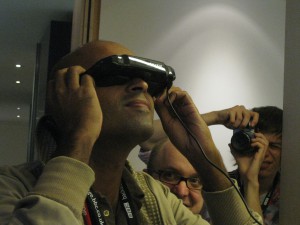
Featured image by Phil Whitehouse on Flickr

One of the complaints I hear most often from concerned parents, is that their kids spend most of their time in the virtual world. Their eyes are constantly glued to their smartphone’s screen.

“How can those kids live like that?” They demand to know. “Are we raising a new generation of zombies, totally dependant on their screens?”

My answer, always, is to remind them just how recently ago smartphones appeared on the world stage. Until 2007, there were no smartphones for the public. That means that this innovation is basically eight years old – a ridiculously short period of time compared to the history of humanity, or even to disrupting innovations like trains or cars. We’re still figuring out how to use the smartphones, well, smartly, and how to engineer our gates into the virtual world. And I tell those concerned parents that in ten years time, their children won’t look into their smartphones to find the virtual world, but will find the virtual world coming to them instead, unbidden.

To understand what I’m talking about, you just need to take a look at one of the hottest scenes in technology today: the virtual and augmented realities (VR and AR). Devices like Oculus Rift, Vive and Samsung Gear VR are coming to the consumer market in this year and the next, and the experience they provide is like nothing we’ve seen before. Trust me on this one: I’ve tried both the Rift and the Gear VR, and found myself swimming in the ocean with whales, visiting Venice, and running from real-life monsters in a temple… without actually getting up from my chair.

A trailer sample of the new generation of VR headsets: the HTC Vive, created by HTC and Valve

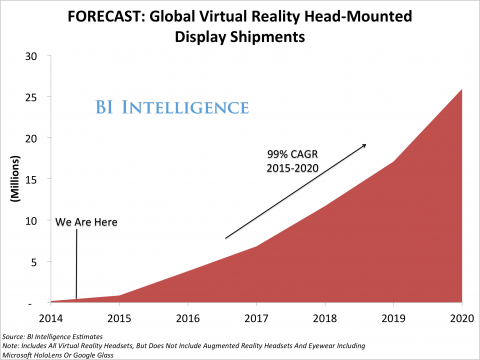
The forecasts for the virtual reality are incredibly optimistic, with Business Insider estimating that shipments of VR headsets will double in number every year, and will create a $2.8 billion hardware market by 2020. The Kzero consulting firm has forecast that annual revenues for VR software will reach $4.6 billion by 2018. This growth rate leaves the iPhone’s far behind, and will mean that – if those forecasts are anywhere near accurate – VR is about to take the world by storm in the next three years.

A forecast by Business Insider for the near future of VR devices. Notice the 99% cumulative annual growth rate - which essentially means a doubling of the number of shipments every year.
A forecast by Business Insider for the near future of VR devices. Notice the 99% cumulative annual growth rate – which essentially means a doubling of the number of shipments every year.

For myself, I’m still hesitant to believe that the VR market can rise so rapidly to prominence. The VR devices, while creating beautiful sceneries for the users to explore, are still cumbersome to wear on the face, and leave you disconnected from your immediate surroundings. So I prefer to stick to the old adage (allegedly by Arthur C. Clarke, and later proven by research in foresight) – “Experts are too optimistic in the near future, and too pessimistic in the long-run.”

These limitations will change in the future, and will most probably lead to the creation of augmented reality (AR) devices, which will look more like a normal pair of glasses, but with the pictures being displayed on the glasses themselves. In that way, the user will be able to see the physical world, along with the virtual world being overlaid on it.

Such AR glasses as described are already in existence, though they are still quite limited in capabilities. The Lumus glasses do just that, as do the Meta glasses. While both are still clunky, cumbersome, and have a limited field of view, they’re the early birds in the AR-Glasses field. If we assume that technology will keep on progressing (and honestly, I can’t see a way for it to stop!), we can be sure that the next AR-Glasses will be thinner, more energy-efficient, and more usable in general.

Let’s talk a bit about the games that AR and VR could open up for us in the future.

Gaming and VR / AR

Using VR for gaming is a no brainer. In fact, that’s the main use analysts are thinking about for VR in the next five years. Imagine running in the virtual landscape of Azaroth in World of Warcraft, or climbing the virtual towers and cathedrals of Paris in Assassin’s Creed. Those are experiences that will make the hardcore gamers flock to VR.

However, I would like to consider a different sort of gaming – one that might be accomplished by means of AR. The gamer of the not-so-far-away-future may actually be the athletic sort, because many games would be played on the streets of the city. By using AR-Glasses, every player would see a different image of the street: some will see the street as a dungeon with a dragon at its end, while others will find themselves forced to evade virtual deadly robots on the prowl, and still others would chase virtual butterflies on the pavement. Admittedly, that’s one crowded street!

Ok, this idea sounds a bit silly when you consider all the human congestion and potential traffic accidents that could occur, but there is definitely a case for streets and physical infrastructures that would be used as playing ground for the hard-core gamers. Even ‘soft gamers’ like most of us could find themselves taking a walk or a jog in seemingly-ordinary streets, with the AR-Glasses in our eyes turning the jog into a run from a dragon (with extra points if you make it out safely!) or involving some interesting activity while walking, like finding and picking up virtual playing cards on the pavement.

There are tantalizing hints in the present for this sort of outdoors-gaming. The “Zombies, Run!” game for the smartphone, is all about being chased by zombies in the real world. The zombies, of course, are virtual and you can only hear them behind you as you run, with the narrator giving you missions. Also, the more you run, the more supplies you collect automatically to build up your base. Another app, by the Mobile Art Lab in Japan, lets you see butterflies through your iPhone’s camera, and swipe at them to catch them – and turn them into discount coupons for restaurants.

Perhaps the most impressive example (although it’s more of a publicity stunt than anything else) of what augmented reality could do for the gaming world has been shown recently by Magic Leap – an AR company, obviously. Take a look!

Obviously, these are only hints for the future, but they’re pointing at an amazingly colorful and fascinating future for us all. The virtual world will no longer be far away from us, or force us to take our smartphones from our pockets. Rather, it would be all around us, and we’ll be able to see and hear it via the AR-Glasses and earbuds that we carry all the time.

The Challenges

Why isn’t this future not here by now? The challenges can be divided into two sorts: technological challenges and societal ones.

The technological challenges consist mainly of battery limits, which have been the ban of smartphones and other wearable computing so far. In the case of highly-sophisticated equipment such as AR-Glasses, the size of the projectors that send pictures to your eyes or onto the glasses is also a problem, and makes for extremely unfashionable glasses. Interestingly, the computing power does not seem to be a real challenge on its own, since AR-Glasses and other wearable computing devices could use the smartphone in one’s pocket to do most of the toughest computing tasks for them… which brings us back to the need to invent more efficient and long-lasting batteries for the smartphone as well.

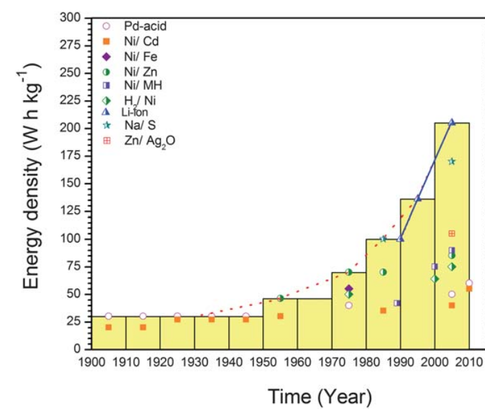
None of these technological challenges represents an impassable barrier. In fact, if there’s one thing we can promise, it’s that future devices will have more efficient batteries, and will have the potential to be smaller. The trends indicate clearly that batteries are rapidly making progress towards better energy density.

The growth in batteries energy density over time. Originally from "Thermodynamic analysis on energy densities of batteries"
The growth in batteries energy density over time.
Originally from the paper “Thermodynamic analysis on energy densities of batteries“, which was brought to my attention in Quora.

The other big challenge is the societal one, and this is where Google Glass crashed into a wall. People simply did not like the fact that the person they’re speaking with could take a picture or a video of them at any time, or may even watch porn during a face-to-face conversation. The design of the Google Glass itself did not do anything to ameliorate those anxieties, and thus people just stopped using the Glasses to avoid becoming social pariahs.

While many believe the Google Glass has completely failed, we must remember that every device begins as a partial failure, since nobody knows how it will be used or how people will react to it. Google Glass was an experiment in design, and Google is now working relentlessly towards Google Glass 2.0, which will fit better with people’s desires and uses.

In short, while there are still challenges to the AR scene, they will be solved sooner or later. Any other conclusion forces us to think that somehow technology will cease to evolve and that companies will stop adapting their products to the consumer market, and I don’t see that happening anytime soon.

Conclusion

There are plenty of uses for virtual and augmented realities other than gaming, and in future posts we’ll deal with them as well. For now, I hope I’ve convinced you that at least part of the gaming activity would not take place solely in front of a screen, but in the streets and the parks. It’s going to be a pretty interesting world to live in, full of colors and messages and experiences that will blend seamlessly with the physical world.

And wouldn’t you like to play such games?

First Human Undergoes a Genetic Engineering Treatment to Reverse Aging

Somewhere in the world, in an undisclosed location, an individual is being genetically engineered right now in order to fulfill humanity’s long-time dream: to reverse biological aging, and become young again. The treatment is provided by BioViva, a small company with incredibly large dreams.

BioViva’s CEO, Elizabeth Parrish, announced that the treatment is composed of two different therapies, which have been developed and applied outside the USA. The patient is doing well at the moment, and will be routinely checked and evaluated, so that within twelve months we can expect some preliminary results.

I wrote a lot in the past about the future of radical longevity – i.e. extending the lifespan of ordinary human beings to a hundred years and more. The field excites me – and quite frankly, if you’re not exhilarated about any progress at all that happens in the field of life extension, then you must have completely managed to forget that you’re going to die someday from old age. Yeah, sorry about that.

I contacted Parrish and requested an interview, and she was kind enough to grant it, and to reveal a vision for humanity’s future that is truly radical and fascinating, but may well come true within the next few decades. It is a vision in which humanity largely eradicates old age and diseases, reaches equality between human beings and nations, and dares greatly in order to achieve greatness.

Disclaimer: I edited the quotes by Ms. Parrish for clarity.

Elizabeth Parrish, CEO of BioViva. Image originally from BioViva.

Are They for Real?

After reading all the above, you would be justified asking: is Parrish and her company for real? Are they the real deal, doing actual science instead of general quackery?

While there is no way to know for sure, BioViva’s scientific advisory board contains some highly influential and prestigious scientists in the field of synthetic biology and longevity. It includes Prof. George Church from Harvard Medical School, who is one of the top experts in the world when it comes to genetic engineering. You can also find in there Dr. Aubrey de Grey – an advocate and a prophet of radical longevity.

The treatment enacted by BioViva, while still largely kept under wraps from the public, involves a combination of two different gene therapies: telomerase induction and myostatin inhibition. Telomerase controls the internal clock of each cell, and there’s evidence that myostatin inhibitors can reverse the accumulation of atherosclerotic plaques in veins. “We have that data in animals and in humans, but we need to run a clinical trial.” Says Parrish.

That is where the patient – the one receiving the combined therapy – comes into the picture. Apparently, he is a volunteer who has decided to sacrifice – or enhance – his body for science. While Parrish is reluctant to reveal his identity, she agreed to say that he’s in his 40s, and relatively healthy.

“We believe it is perfect because we could work with someone who was not in the worst stage of illness.” She explains.

The experiments are taking place outside the U.S. since “we didn’t want to deal with legal issues giving the treatment in the US, and it’s less expensive,” as Parrish puts it. If this sounds callous to you, you should know that many other pharmaceutical companies, including industry giants like Merck and Johnson & Johnson, are conducting their research outside the U.S. as well.

In general, Parrish isn’t holding much stock with the FDA and other governmental bodies that attempt to regulate medicine in the United States. “The first amendment protects your right over your body, to do with as you wish.” She states calmly. “I don’t think the government has a right to tell you what to do with your body, as long as it does not affect other people.”

And herein seems to lie one of the most interesting questions for the future of aging: assuming BioViva’s treatment strikes water and succeeds, the public will surely clamor for the new fountain of youth. Will governments worldwide be able to regulate it? Or will this become the great new illegal drug of the new century? At the moment, governments largely endorse medicine that is focuses on repairing the body. Will those governments be as happy to support human enhancement procedures?

“I think that what matters is the public demand, and the government will change its regulation according to public demand.” Says Parrish. And if the government doesn’t budge, then “a lot of people will go outside the country to get the treatment, and it may make some small countries very rich. Israel may become one of these countries, since it is very much ahead in research and very open to biotech. Another place is Japan, which has recently loosened its regulation on experimental medicine.”

The Future of Aging

So far, the medical sciences have mostly focused on repairing the damages being caused to the body over one’s lifetime. Parrish’s solution is much more radical and pro-active: she wants to hold back aging itself, since aging is correlated with so many other diseases. And she’s certain of success.

“The line between enhancement and preventative medicine will be blurry in the future.” She forecasts. “People will be taking gene therapy at younger and younger ages. This will probably be a twenty years process, but I believe that when you get to middle age, gene therapy will be given essentially as immunization to aging.”

This forecast, of course, partly relies on the current experiment having successful outcomes. Parrish is hopeful to see several different effects in the human patient, which include “outward markers like skin becoming youthful again, internal organs becoming healthy, increase in brain function and muscle mass, and better cardiovascular health.” All of the above effects were demonstrated in animal models, but never before in an experiment dedicated specifically to show that we can turn back biological aging.

Parrish expects to have preliminary results in the next twelve months. Until that happens, I take the chance to ask her what their next move will be, should the patient indeed regain some of his youth back. In that case, she says, BioViva would love to take this treatment through the FDA treatment approval process. But there is only one problem: “The FDA doesn’t consider aging as a disease.”

This is a mindset that Parrish has set out to change. Instead of trying to pop a pill for every different disease, we should go deeper and fix the aging process itself. “Every drug the FDA has passed, is still an experiment, and you’ll probably die – usually because of the disease the drug was supposed to take care of.” She says.

Parrish hopes that in twenty years they will get the costs down so that the average citizen would be able to pay for this treatment. “It’s cost effective,” she says, “because the US government is spending trillions for treating age-related diseases. So we hope it would get to everyone.”

As soon as the treatment becomes cheap enough, she will be the first to give it a shot. “I am 44, and I would say I have a chance to enjoy this treatment myself. I would absolutely take it right now, and my whole team would (our medical advisor has undergone the myostatin inhibition treatment five years ago), but the costs of the therapeutic are very high.”

Conclusion

It is almost certain that BioViva’s treatment will fail in the short run. Virtually no experiment in biology or in medicine ever works out the way it should for the first time, and there’s no reason to believe that BioViva’s treatment will be any different. However, we should not view this experiment as a one-time effort, but as one of the cobblestones in the path ahead.

The convictions upon which Parrish makes her case rely on the right of the individual over his or her body, the disillusionment with the power of the government to decide what’s best for the citizen, and moreover – on the realization that we can fix nature and reprogram our body as we desire. And in her words, as they are quoted in the BioViva site: “we want to make you smarter, stronger, faster and more visually accurate, and I think that is a good thing.”

Smarter, stronger, faster… and younger?

Sign me in.

.

.

.

Featured image at top of article is originally from Flickr user Arileu