I am a Futures Studies researcher with special expertise in foresight, wild cards (black swans), and analysis of emerging and disruptive technologies. I have spoken to hundreds of conference audiences and appeared frequently on TV and radio to discuss for a wide range of listeners and viewers the fascinating study of the future of technology and society. Most recently, I have been lecturing for and providing consultation to entities worldwide including large companies and firms, the Lahav Management School at Tel Aviv University and other educational institutions, and as an invited keynote lecturer to innovation and global thinking workshops internationally including Greece, Kazakhstan, and Belarus.
A year ago I wrote a short chapter for a book about emerging technologies and their impact on security, published by Yuval Ne’eman Workshop for Science, Technology & Security and curated by Deb Housen-Couriel. The chapter focused on drones and the various ways they’re being used in the hands of criminals to smuggle drugs across borders, to identify and raid urban marijuana farms operated by rival gangs, and to smuggle firearms and lifestyle luxury items over prison walls. At the end of the paper I provided a forecast: drones will soon be used by terrorists to kill people.
Well, it looks like the future is catching up with us, since a report from Syria (as covered in Popular Mechanic) has just confirmed that ISIS is using small drones as weapons, albeit not very sophisticated ones. In fact, the terrorists are simply loading the drones with explosives, and trying to smash them on the enemy forces.
That, of course, is hardly surprising to anyone who has studied the use of drones by ISIS. The organization is drawing young and resourceful Muslims from the West, some of whom have expertise with emerging technologies like 3D-printers and aerial drones. These kinds of technologies can be developed today in the garage for a few hundred dollars, so it should not surprise anyone that ISIS is using aerial drones wherever it can.
The Islamic State started using drones in 2014, but they were utilized mainly for media and surveillance purposes. Drones were used to capture some great images from battles, as well as for battlefield reconnaissance. Earlier in 2015, the U.S. has decided that ISIS drones are important enough to be targeted for destruction, and launched an airstrike to destroy a drone and its operators. In other words, the U.S. has spent tens or even hundreds of thousands of dollars in ammunition and fuel for the most expansive and sophisticated aircraft and missiles in the world, in order to destroy a drone likely costing less than one thousand dollars.
ISIS is using drones on the battlefield. Source: Vocativ
All of this evidence is coming in from just this year and the one before it. How can we expect drones to be used by terrorist organizations in 2016?
Scenarios for Aerial Drones Terrorist Attacks
In a research presented in 2013, two Dutch researchers from TNO Defence Research summed up four scenarios for malicious use of drones. Two of these scenarios are targeting civilians and would therefore count as terrorist attacks against unarmed civilians.
In the first scenario, a drone with a small machine gun is directed into a stadium, where it opens fire on the crowd. While the drone would most probably crash within a few seconds because of the backlash, the panic caused by the attack would cause many people to trample each other in their flight to safety.
In the second scenario, a drone would be used by terrorists to drop an explosive straight on the head of a politician, in the middle of a public speech. Security forces in the present are essentially helpless in the face of such a threat, and at most can order the politician into hiding as soon as they see a drone in the sky – which is obviously an impractical solution.
Both of the above scenarios have been validated in recent years, albeit in different ways. A drone was illegally flown into a stadium in the middle of a soccer game between Serbia and Albania. Instead of carrying a machine gun, the drone carried the national flag of Greater Albania – which one of the Serbian players promptly ripped down. He was assaulted immediately by the Albanian players, and soon enough the fans stormed the field, trampling over fences and policemen in the process.
The second scenario occurred in September 2013, in the midst of an election campaign event in Germany. A drone operated by a 23 years old man was identified taking pictures in the sky. The police ordered the operator to land the drone immediately, and he did just that and crashed the drone – intentionally or not – at the feet of German Chancellor Angela Merkel. If that drone was armed with even a small amount of explosives, the event would’ve ended in a very different fashion.
As you can understand from these examples, aerial drones can easily be used as tools for terrorist attacks. Their potential has not nearly been fulfilled, probably because terrorists are still trying to equip those lightweight drones with enough explosives and shrapnel to make an actual impact. But drones function just as well with other types of ammunition – which can be even scarier than explosives.
Here’s a particularly nasty example: sometime in 2016, in a bustling European city, you are sitting and eating peacefully in a restaurant. You see a drone flashing by, and smile and point at it, when suddenly it makes a sharp turn, dives into the restaurant and floats in the center for a few seconds. Then it sprays all the guests with a red-brown liquid: blood which the terrorists have drawn from a HIV-carrying individual. Just half a liter of blood is more than enough to decorate a room and to cover everyone’s faces. And now imagine that the same happens in ten other restaurants in that city, at the same time.
Would you, as tourists, ever come back to these restaurants? Or to that city? The damages to tourism and to morale would be disastrous – and the terrorists can make all that happen without resorting to the use of any illegal substances or equipment. No explosives at all.
Conclusion and Forecast
Here’s today forecast: by the year 2016, if terrorists have their wits about them (and it seems the ISIS ones certainly do, most unfortunately), they will carry out a terrorist attack utilizing drones. They may use the drones for charting out the grounds, or they may actually use the drones to carry explosives or other types of offensive materials. Regardless, drones are such an incredibly useful tool in the hands of individual terrorists that it’s impossible to believe they will not be used somehow.
How can we defend ourselves from drone terrorist attacks? In the next post I will analyze the problem using a foresight methodology called Causal Layered Analysis, in order to get to the bottom of the issue and consider possible solutions.
Till that time, if you find yourself eating in a restaurant when a drone comes in – duck quickly.
You’re watching MasterChef on TV. The contestants are making their very best dishes and bring them to the judges for tasting. As the judges’ eyes roll back with pleasure, you are left sitting on your couch with your mouth watering at the praises they heap upon the tasty treats.
Well, it doesn’t have to be that way anymore. Meet Moley, the first robotic cook that might actually reach yours household.
Moley is composed mostly of two highly versatile robotic arms that repeat human motions in the kitchen. The arms can basically do anything that a human being can, and in fact receive their ‘training’ by recording highly esteemed chefs at their work. According to the company behind Moley, the robot will come equipped with more than 2,000 digital recipes installed, and will be able to enact each and every one of them with ease.
I could go on describing Moley, but a picture is worth a thousand words, and a video clip is worth around thirty thousand words a second. So take a minute of your time to watch Moley in action. You won’t regret it.
Moley is projected to get to market in 2017, and should cost around $15,000.
What impact could it have for the future? Here are a few thoughts.
Impact on Professional Chefs
Moley is not a chef. It is incapable of thinking up of new dishes on its own. In fact, it is not much more than a ‘monkey’ replicating every movement of the original chef. This description, however, pretty much applies to 99 percent of kitchen workers in restaurants. They spend their work hours doing exactly as the chef tells them to. As a result, they produce dishes that should be close to identical to each other.
As Moley and similar robotic kitchen assistants come into use, we will see a reduced need for cooks and kitchen workers in many restaurants. This trend will be particularly noticeable in large junk food networks like McDonald’s that have the funds to install a similar system in every branch of the network, thereby cutting their costs. And the kitchen workers in those places? Most of them will not be needed anymore.
Professional chefs, though, stand to gain a lot from Moley. In a way, food design could become very similar to creating apps for smartphones. Apps are so hugely successful because everybody has an end device – the smartphone – and can download an app immediately for a small cost. Similarly, when many kitchens make use of Moley, professional chefs can make lots of money by selling new and innovative digital recipes for just one dollar each.
Sushi for all? That is one app I can’t wait for.
Are We Becoming a Plutonomy?
In 2005, Citigroup sent a memo to its wealthiest clients, suggesting that the United States is rapidly turning into a plutonomy: a nation in which the wealthy and the prosperous are driving the economy, while everybody else pretty much tags along. In the words of the report –
“There is no such thing as “The U.S. Consumer” or “UK Consumer”, but rich and poor consumers in these countries… The rich are getting richer; they dominate spending. Their trend of getting richer looks unlikely to end anytime soon.”
There is much evidence to support Citigroup’s analysis, and Boston Consulting Group has reached similar conclusions when forecasting the increase in financial wealth of the super-rich in the near future. In short, it would seem that the rich keep getting richer, whereas the rest of us are not enjoying anywhere near the same pace of financial growth. It is therefore hardly surprising to find out that one of the top advices given by Citigroup in its Plutonomy Memo was basically to invest in companies and firms that provide services to the rich and the wealthy. After all, they’re the ones whose wealth keeps on increasing as time moves on. Why should companies cater to the poor and the downtrodden, when they can focus on huge gains from the top 10 percent of the population?
Moley could easily be a demonstration for a service that befits a plutonomy. At $15,000 per robot, Moley could find its place in every millionaire’s house. At the same time, it could kick out of employment many of the low-level, low-earning cooks in kitchens worldwide.
You might say, of course, that those low-level cooks would be able to compete in the new app market as well, and offer their own creations to the public. You would be correct, but consider that any digital market becomes a “winner takes all” market. There is simply no place for plenty of big winners in the app – or digital recipe – market.
Moley, then, is essentially another invention driving us closer to plutonomy.
And yet…
New technologies have always cost some people their livelihood, while helping many others. Matt Ridley, in his masterpiece The Rational Optimist, describes how the guilds fought relentlessly against the industrial revolution in England, even though that revolution led in a relatively short period of time to a betterment of the human condition in England. Some people lost their workplace as a result of the industrial revolution, but they found new jobs. In the meantime, everybody suddenly enjoyed from better and cheaper clothes, better products in the stores, and an overall improvement in the economy since England could export its surplus of products.
Moley and similar robots will almost certainly cost some people their workplaces, but in the meantime it has the potential to minimize the cost of food, minimize time spent on making food in the household (I’m spending 45-60 minutes every day making food for my family and me), and elevate the lifestyle quality of the general public – but only if the technology drops in price and can be deployed in many venues, including personal homes.
Conclusion
If it’s a forecast you want, then here it is. While we can’t know for sure whether Moley itself will conquer the market, or some other robotic company, it seems likely that as AI continues to develop and drop in prices, robots will become part of many households. I believe that the drop in prices would be significant over a period of twenty years so that almost everybody will enjoy the presence of kitchen robots in their homes.
That said, the pricing and services are not a matter of technological prowess alone, but also a social one: will the robotic companies focus on the wealthy and the rich, or will they find financial models with which to provide services for the poor as well?
This decision could shape our future as we know it, and define whether we’ll keep our headlong dive towards plutonomy.
The futurist Ian Pearson, in his fascinating blog The More Accurate Guide to the Future, has recently directed my attention to a new report by Bloomberg Business. Just two days ago, Bloomberg Business published a wonderful short report that identifies ten of the worst-case scenarios for 2016. In order to write the report, Bloomberg’s staff has asked –
“…dozens of former and current diplomats, geopolitical strategists, security consultants, and economists to identify the possible worst-case scenarios, based on current global conflicts, that concern them most heading into 2016.”
I really love this approach, since currently many futurists – particularly the technology-oriented ones – are focusing mainly on all the good that will come to us soon enough. Ray Kurzweil and Tony Seba (in his book Clean Disruption) are forecasting a future with abundant energy; Peter Diamandis believes we are about to experience a new consumerism wave by “the rising billion” from the developing world; Aubrey De-Grey forecasts that we’ll uncover means to stop aging in the foreseeable future. And I tend to agree with them all, at least generally: humanity is rapidly becoming more technologically advanced and more efficient. If these upward trends will continue, we will experience an abundance of resources and a life quality that far surpasses that of our ancestors.
But what if it all goes wrong?
When analyzing the trends of the present, we often tend to ignore the potential catastrophes, the disasters, and the irregularities and ‘breaking points’ that could occur. Or rather, we acknowledge that such irregularities could happen, but we often attempt to focus on the good instead of the bad. If there’s one thing that human beings love, after all, it’s feeling in control – and unexpected events show us the truth about reality: that much of it is out of our hands.
Bloomberg is taking the opposite approach with the current report (more of a short article, really): they have collected ten of the worst-case scenarios that could still conceivably happen, and have tried to understand how they could come about, and what their consequences would be.
The scenarios range widely in the areas they cover, from Putin sidelining America, to Israel attacking Iran’s nuclear facilities, and down to Trump winning the presidential elections in the United States. There’s even mention of climate change heating up, and the impact harsh winters and deadly summers would have on the world.
Strangely enough, the list includes only one scenario dealing with technologies: namely, banks being hit by a massive cyber-attack. In that aspect, I think Bloomberg are shining a light on a very large hole in geopolitical and social forecasting: the fact that technology-oriented futurists are almost never included in such discussions. Their ideas are usually far too bizarre and alienating for the silver-haired generals, retired diplomats and senior consultants who are involved in those discussions. And yet, technologies are a major driving force changing the world. How could we keep them aside?
Technological Worse-Case Scenarios
Here are a few of my own worse-case scenarios for 2016, revolving around technological breakthroughs. I’ve tried to stick to the present as much as possible, so there are no scientific breakthroughs in this list (it’s impossible to forecast those), and no “cure to aging” or “abundant energy” in 2016. That said, quite a lot of horrible stuff could happen with technologies. Such as –
Proliferation of 3D-printed firearms: a single proficient designer could come up with a new design for 3D-printed firearms that will reach efficiency level comparable to that of mass-manufactured weapons. The design will spread like wildfire through peer-to-peer services, and will lead to complete overhaul of the firearm registration protocols in many countries.
First pathogen created by CRISPR technology: biology enthusiasts are now using CRISPR technology – a genetic engineering method so efficient and powerful that ten years ago it would’ve been considered the stuff of science fiction. It’s incredibly easy – at least compared to the past – to genetically manipulate bacteria and viruses using this technology. My worst case scenario in this case is that one bright teenager with the right tools at his hands will create a new pathogen, release it to the environment and worse – brag about it online. Even if that pathogen will prove to be relatively harmless, the mass scare that will follow will stop research in genetic engineering laboratories around the world, and create panic about Do-It-Yourself enthusiasts.
A major, globe-spanning A. disaster: whether it’s due to hacking or to simple programming mistake, an important A.I. will malfunction. Maybe it will be one – or several – of the algorithms currently trading at stock markets, largely autonomously since they’re conducting a new deal every 740 nanoseconds. No human being can follow their deals on the spot. A previous disaster in that front has already led in 2012 to one algorithm operated by Knight Capital, purchasing stocks at inflated costs totaling $7 billion – in just 45 minutes. The stock market survived (even if Knight Capital’s stock did not), but what would happen if a few algorithms go out of order at the same time, or in response to one another? That could easily happen in 2016.
First implant virus: implants like cardiac pacemakers, or external implants like insulin pumps, can be hacked relatively easily. They do not pack much in the way of security, since they need to be as small and energy efficient as possible. In many cases they are also relying on wireless connection with the external environment. In my worst-case scenario for 2016, a terrorist would manage to hack a pacemaker and create a virus that would spread from one pacemaker to another by relying on wireless communication between the devices. Finally, at a certain date – maybe September 11? – the virus would disable all pacemakers at the same time, or make them send a burst of electricity through the patient’s heart, essentially sending them into a cardiac arrest.
This blog post is not meant to create panic or mass hysteria, but to highlight some of the worst-case scenarios in the technological arena. There are many other possible worst-case scenarios, and Ian Perarson details a few others in his blog post. My purpose in detailing these is simple: we can’t ignore such scenarios, or keep on living our lives with the assumption that “everything is gonna be alright”. We need to plan ahead and consider worst-case scenarios to be better prepared for the future.
Do you have ideas for your own technological worst-case scenarios for the year 2016? Write them down in the comments section!
Recently, a town council in North Carolina rejected plans to open a solar farm in its area, after the town people expressed their fears about the new solar technology. As reported in the Roanoke-Chowan News-Herald, retired science teacher Jane Mann, complained that no one could assure her that solar panels did not cause cancer. Her husband, Bobby Mann, chimed in and warned the council that solar farms would suck up all the energy from the sun. Needless to say, neither of these arguments has any base in reality. The council, however, heard their warnings and voted against establishing a solar farm in the area. Later, the same town council also voted for a moratorium on future solar farms.
This is probably an isolated incident. In fact, the case has been covered widely in the last day, and the couple’s remarks have been met with worldwide ridicule, so some would say that it’s not likely to repeat itself. All the same, I believe similar arguments are bound to arise in other potential locations for solar farms. People will read about the claims associating between solar panels and deaths from cancer, and conspiracy theories will be created out of the blue. In some places, like that North Carolina town, fear will keep the new and clean technology from being deployed and used.
And if that happens, I can’t help but think that Greenpeace will be the ones to blame.
Greenpeace’s Feud with Science
A few years ago, I did a podcast episode about genetic engineering in plants. I wanted people to understand the science behind the technique, so I invited two distinguished professors from the academy who were experts in the field. I also invited a professor who was an expert in bioethics, to highlight the dilemmas surrounding genetic engineering and genetically modified organisms (GMOs). Finally, I asked a senior member in Greenpeace to come to the show and provide their take on GMOs. I still remember her words, and this is a direct quote –
“If you’re inviting doctors to the show, I’m not coming.”
To say that her words blew me away is an understatement. I used to donate monthly to Greenpeace under the presumption that they’re striving to change the world to the better – but how can they know in which area they should invest their political and public influence, if they’re not guided by science and by experts? And can’t they actually do more harm than good, by supporting the wrong causes?
Since that time, I started following Greenpeace’s agenda and actions and scrutinizing them closely. It was immediately clear that the ‘green’ organization was acting more on blind faith and belief in the healing and wholesome power of nature, than on scientific findings.
Oh, you want examples? Here’s the most famous one, that we experience up to this date: the campaign against Golden Rice in particular, and genetically modified organisms in general.
Greenpeace’s campaign against the Golden Rice, for one, has succeeded in delaying the deliverance of genetically modified rice to farmers in poor countries. “Golden Rice” is golden indeed since it had been genetically altered to produce a precursor of vitamin A, which is a vital nutrient for human consumption. Sadly, vitamin A is lacking in many areas in the developing world. In fact, half a million children who suffer from severe vitamin A deficiency go blind every year, and half of them die soon after. The Golden Rice has been ready for use since the beginning of the 21st century, and yet Greenpeace’s campaign against GMOs in general and Golden Rice in particular has kept it off the market. At the same time, study after study show that GMOs are safe for eating, and in many cases are safer for the environment than ordinary crops.
Unfortunately, the scientific evidence on the issue of GMOs does not matter much to Greenpeace, which keeps on fighting against GMOs and utilizing bad science, funding extremely shoddy studies, and scaremongering all over the world. No wonder that Stephen Tindale, ex-director of Greenpeace, has recently denounced anti-GM food campaigns of the kind Greenpeace is leading still. William Saletan, who has studied the issue extensively, published his results in Slate –
“…the deeper you dig, the more fraud you find in the case against GMOs. It’s full of errors, fallacies, misconceptions, misrepresentations, and lies. The people who tell you that Monsanto is hiding the truth are themselves hiding evidence that their own allegations about GMOs are false. They’re counting on you to feel overwhelmed by the science and to accept, as a gut presumption, their message of distrust.”
I don’t want this post to become a defense poster for GMOs. You can find solid reviews of the scientific evidence in some of the links above. What’s important to realize, though, is that Greenpeace have deliberately led a tactic that relies on people’s lack of scientific knowledge and their automatic fears of every new technology. This tactic is harmful in two ways: first, it can actually bring harm to environment since our choices do not rely on solid science but on scare tactics; second, it poisons people’s minds against science and scientific evidence, so that they are unwilling to look at new technologies in a calm and rational manner – even if those technologies are much safer for the environment than anything that came before them.
Which is exactly what happened at North Carolina this week, when the public rejected solar energy partly because of irrational and unfounded fears. Ironically, Greenpeace has put a lot of emphasis on solar energy as the preferred direction to solve the world’s energy problems, and their efforts are commendable. However, when they’ve spent the last few decades teaching people to be afraid of conspiracy theories by evil scientists, industry and government, why did they think people would stop there? Why shouldn’t people question the scientific base against solar panels’ safety, when Greenpeace has never bothered to encourage and promote scientific literacy and rational thinking among their followers?
Today, Greenpeace should feel proud of itself – it has primed people precisely for this kind of a response: a knee-jerk rejection of anything that is new and unfamiliar. With Greenpeace’s generous assistance, fear now overrides rational thinking.
I don’t like scare tactics, but when one of them is as beautiful as this one, I just can’t resist the urge to show it here. Image originally from the Inspiration Room, and the campaign was developed by BBDO Moscow.
Conclusion
For the last few decades, concerned scientists have watched with consternation as the environmentalist movement – with Greenpeace at its head – took an ugly turn and dived headlong into pseudo-science, mysticism and fear-mongering, while leaving solid science behind. This is particularly troubling since we need a strong environmentalist movement to help save the Earth, but it has to build its demands and strategies on a solid scientific base. Anything less than that, and the environmentalists could actually cause more harm to the environment – and to humanity – than the worst moneygrubbing industry leaders.
Even worse than that, in order to obtain public support for unscientific strategies, Greenpeace and other environmentalist movements have essentially “poisoned the wells” and have turned people’s minds against scientists and scientific studies. Instead of promoting rational thinking, they turned to scaremongering tactics that might actually backfire on them now, as they try to promote solar power technology that’s actually evidence-based.
How can we rectify this situation? The answer is simple: promote scientific literacy and rational thinking. I dare to hope that in the near future, Greenpeace will finally realize that science is not an enemy, but a way to better understand the world, and that its demands must be based on solid science. Anything less than that will lead to eventual harm to the planet.
In this post we’ll embark on a journey back in time, to the year 2000, when you were young and eager students. You’re sitting in a lecture given by a bald and handsome futurist. He’s promising to you that within 15 years, i.e. in the year 2015, the exponential growth in computational capabilities will ensure that you will be able to hold a super-computer in your hands.
“Yeah, right,” a smart-looking student sniggers loudly, “and what will we do with it?”
The futurist explains that the future you will watch movies, and hear music with that tiny computer. You exchange bewildered looks with your friends. You all find that difficult to believe in – how can you store large movies on such a small computer? The futurist explains that another trend – that of exponential growth in data storage – will mean that your hand-held super-computer will also store tens of thousands of megabytes.
You see some people in the audience rolling their eyes – promises, promises! Yet you are willing to keep on listening. Of course, the futurist then completely jumps off the cliff of rationality, and promises that in 15 years, everyone will enjoy wireless connectivity almost everywhere, at a speed of tens of megabytes per second.
“That makes no sense.” The smart student laughs again. “Who will ever need such a wireless network? Almost nobody has laptop computers anyway!”
The futurist reminds you that everyone is going to carry super-computers on their bodies in the future. The heckler laughs again, loudly.
The smartphone: a result of several trends coming into fruition together. Source: Pixabay.
The Failure of Segregation
I assume you realize the point by now. The failure demonstrated in this exchange is what I call The Failure of Segregation. It is an incredibly common failure, stemming from our need to focus on only a single trend, and missing the combined and cumulative impacts of two, three or even ten trends at the same time.
In the example above, the forecast made by the futurist would not have been reasonable if only one trend was analyzed. Who needs a superfast Wi-Fi if there aren’t advanced laptops and smartphones to use it? Almost nobody. So from a rational point of view, there’s no reason to invest in such a wireless network. It is only when you consider three trends together – exponential growth in computational capabilities, data storage and wireless network – that you can understand the future.
Every product we enjoy today, is the result of several trends coming into fruition together. Facebook, for example, would not have been nearly as successful if not for these trends –
Exponential growth in computational capabilities, so that nearly everyone has a personal computer.
Miniaturization and mobilization of computers into smartphones.
Exponential improvement of digital cameras, so that every smartphone has a camera today.
Cable internet everywhere.
Wireless internet (Wi-Fi) everywhere.
Cellular internet connections provided by the cellular phone companies.
GPS receiver in every smartphone.
The social trend of people using online social networks.
These are only eight trends, but I’m sure there are many others standing behind Facebook’s success. Only by looking at all eight trends could we have hoped to forecast the future accurately.
Unfortunately, it’s not that easy to look into all the possible trends at the same time.
Facebook: another result of the aggregation of several trends together. Source: LimeTree Online
A Problem of Complexity
Let’s say that you are now aware of the Failure of Segregation, and so you try to contemplate all of the technological trends together, to obtain a more accurate image of the future. If you try to consider just three technological trends (A, B and C) and the ways they could work together to create new products, you would have four possible results: AB, AC, BC and ABC. That’s not so bad, is it?
However, if you add just one more technological trend to the mix, you’ll find yourself with eleven possible results. Do the calculations yourself if you don’t believe me. The formula is relatively simple, with N being the number of trends you’re considering, and X being the number of possible combinations of trends –
It’s obvious that for just ten technological trends, there are about a thousand different ways to combine them together. Considering twenty trends will cause you a major headache, and will bring the number of possible combinations up to one million. Add just ten more trends, and you get a billion possible combinations.
To give you an understanding of the complexity of the task on hand, the international consulting firm Gartner has taken the effort to map 37 of the most highly expected technological trends in their Gartner’s 2015 Hype Cycle. I’ll let you do the calculations yourself for the number of combinations stemming from all of these trends.
The problem, of course, becomes even more complicated once you realize you can combine the same two, three or ten technologies to achieve different results. Smart robots (trend A) enjoying machine learning capabilities (trend B) could be used as autonomous cars, or they could be used to teach pupils in class. And of course, throughout this process we pretend to know that said trends will be continue just the way we expect them to – and trends rarely do that.
What you should be realizing by now is that the opposite of the Failure of Segregation is the Failure of Over-Aggregation: trying to look at tens of trends at the same time, even though the human brain cannot hold such an immense variety of resultant combinations and solutions.
So what can we do?
Dancing between Failures
Sadly, there’s no golden rule or a simple solution to these failures. The important thing is to be aware of their existence, so that discussions about the future cannot be oversimplified into considering just one trend, detached from the others.
Professional futurists use a variety of methods, including scenario development, general morphological analysis and causal layered analysis to analyze the different trends and attempt to recombine them into different solutions for the future. These methodologies all have their place, and I’ll explain them and their use in other posts in the future. However, for now it should be clear that the incredibly large number of possible solutions makes it impossible to consider only one future with any kind of certainty.
In some of the future posts in this series, I’ll delve deeper into the various methodologies designed to counter the two failures. It’s going to be interesting!
A few years ago I gave a short lecture about conspiracy theories, in which I described the HAARP: High Frequency Active Auroral Research Program. I explained about some of the purposes and goals of the project, most of which dealt with influencing the ionosphere to aid radio wave transmission. The lecture was recorded and uploaded to Youtube (in Hebrew, so I’m not going to link to it here), and apparently was picked up by some conspiracy theorists – particularly chemtrails activists – as proof that I support and endorse their ideas.
The said conspiracy theories are long and convoluted, but most activists seem to agree on one point: a shadow organization is controlling all governments, and is using climate and weather engineering technologies to spread toxic materials throughout the environment. These toxic materials infect people with autism, Alzheimer’s disease, cancer, and occasionally also assert some form of mind control to calm the distraught and dying population. Why are shadowy government / the Illuminati / the Free Masons doing all that? The most detailed version of the tale I’ve found was that they want to eliminate most of the human population on Earth, in order to return us to the olden days of sustainability. And that, in an incredibly minimalized nutshell, is the conspiracy theory behind chemtrails.
Chemtrails: are ‘they’ poisoning us all?
Needless to say, these ideas are very far away from my own. And yet, my own reading about conspiracies in the past and present has led me to raise some uncomfortable questions of my own. How can we know, for one, when a conspiracy theory has a grain of truth in it, or when it’s completely false?
Real Conspiracies – Past and Present
The truth is that there is some basis to believing in conspiracy theories. Governments can act maliciously against the common citizen, or against a group of citizens – and even hide evidence of their wrongdoings. Some conspiracy theories from the past that turned right include –
The government is spying on us: the belief that the U.S. government is on after us all was confirmed when Snowden released highly classified documents that proved once and for all that several large software and hardware companies secretly provided the government with access to their data. Using this data, the government could essentially read every e-mail sent by targeted individuals, and follow their every move online. As it turns out, this spying program is still taking place today.
The government infects us with diseases: during the 1940s, Guatemalan physicians had deliberately infected healthy Guatemalan citizens with syphilis, under the guidance and funded assistance of the United States. The documentation of the experiments was only discovered in 2005, but there is no doubt today that this “dark chapter in the history of medicine”, as the NIH director called them, actually occurred. In fact, the U.S. has submitted a formal apology for these incidents.
The government is controlling our minds: this one is trickier than the rest, since one has to define ‘mind control’ before trying to figure out how the government is actually doing that. It’s pretty obvious that even democratic governments certainly influence our paradigms and belief systems, and are constantly trying to shape us into becoming more productive and respectful of each other, since that serves the greater good of both the government and the citizens themselves. That is why governments are funding public schools, after all, and I see very few people complaining about that form of mind control.
A more delicate form of ‘mind control’, more accurately described as “subtle persuasion”, is beginning to be utilized mainly by political candidates. By making use of big data collected about citizens, Obama’s team of data scientists have pinpointed the “highly persuadable” voters during the 2012 elections campaign, and targeted them specifically during the campaign. As Sasha Issenberg describes in her article in MIT Technology Review, the data scientists have even figured out how best to approach individuals and persuade them according to dozens of different parameters. This is a form of persuasion that should be viewed with much suspicion, since the data scientists are in effect finding the best ‘keys’ to use for every person’s locked cognition – and who among us does not have such keys? So yes – in a way, politicians do try to control our minds, but in very delicate and subtle ways.
Obviously, this is a very short list of past and present conspiracy theories that turned out real after all, or have never been denied, in the case of the third one. There are many others, and I would encourage you to read Conspiracy Theories and Secret Societies for Dummies, if you want to know more about them. For now, it is enough for us to understand that yes – occasionally, conspiracy theories can turn out very real indeed.
That said, there are differences between the popular conspiracy theories, and the ones that have turned out real. We can identify those differences in order to figure out which conspiracy theories should be considered carefully, and which we can ignore.
Real vs. Spurious Conspiracy Theories
There are four claims or assumptions that are exceedingly common in conspiracy theories, and should raise alarm bells in our minds when we hear them. The presence of any one of the following in a conspiracy theory should make us doubt its authenticity. These are –
Claims unsubstantiated by science: we’re talking here about the more spurious claims – witchcraft and ion-waves controlling people’s minds, for example, or claims about the government engineering the global climate, when environmental scientists are still scratching their heads and trying to understand just how we can negate global warming.
Science: not a liberal conspiracy. Taken from Pinterest. Originally attribted to Carl Sagan.
Claims requiring extremely unlikely collaborations: is there truly a ‘shadow government’ striving for a single goal? It would have to include sets of sworn enemies like Iran and Israel, North Korea and South Korea, India and Pakistan. Do you believe that none of the politicians from more than a hundred nations, their assistants, and all of those involved in international relations, have never exposed this kind of an overarching government to the media? I almost wish for the existence of such a shadow government, since it’ll show that nations can get along after all for a single purpose.
Claims that require the people in charge to put themselves and their families in danger: one of the top claims of the chemtrails conspiracy theories is that the government is trying to poison us all from above. Such an approach would obviously also injure the people in charge and their families, who are breathing the same air as we are. It really takes suspense of disbelief to the maximum to believe that people would deliberately cause harm to themselves and their families.
Extreme and inexplicable clumsiness in execution: why does the ‘shadow government’ want to spread Alzheimer’s disease, cancer and infections all around? Why is the government “dropping pathogens and other, more threatening materials, aimed at making us sick” in Edward Group’s words? One of the more popular explanations is that ‘they’ want to minimize world’s population. But if that’s the case, why use Alzheimer’s disease, which mainly disables the elderly? Why cancer – a disease correlated with old age? And why use diseases that make people ill for a very long time until they die, while forcing their relatives to take care of them – thus damaging the world’s economy? It’s difficult to believe any organization sophisticated and efficient enough to keep the original plot secret would flounder so badly when it comes to execution in such inefficient ways.
You can see that in all three real conspiracies I detailed above, none of these three assumptions takes place. In all three cases there is a valid scientific basis behind the conspiracy theory, the collaborations between the ‘plotters’ and the executioners are plausible, and when somebody gets harmed (as in the case of the syphilis experiment), it’s never the perpetrators of the conspiracy. Last but not least, the methods for execution of the conspiracy largely make sense and are as efficient as can be considering the scientific and technological limitations.
The Chemtrails Test
How does the chemtrails theory stand when tested for these three warning signs? Not well at all. The idea that governments mind-control or infect the population with diseases using volatile compounds spread from above does not stand up to scientific scrutiny (1st warning sign). Even if the government could do that, it seems like an extremely clumsy execution (4th warning sign): why should the government repeatedly spread toxic materials in the air, in the most noticeable way possible, instead of doing it just a few times at low altitude where such materials would have more effect? Why not spread the materials in drinking water, or in foodstuff?
These claims seem even more bizarre when one realizes that transmission of pathogens and/or mind altering drugs through the air will definitely cause injury to the families of decision makers, as they breathe the same air everybody does (3rd warning sign). And last but not least: execution of such a plan would require collaboration between a large number of entities (2nd warning sign): scientists, airplane pilots, and even diplomats, politicians and heads of states from all over the globe. It seems extremely unlikely that such a collaboration could occur, or be kept under shrouds for long.
Conclusion
It’s important to understand that conspiracy theories occasionally do turn out real, at least partially. The ‘weirdness factor’ of the theory does not necessarily exclude it from rigorous deliberation, since the future always seems weird to us from our viewpoint in the present (see Failure of the Paradigm for more on that). However, we can differentiate between certain, more plausible, conspiracy theories, and others that are much less plausible – and therefore require more evidence before we can consider them seriously.
In this post I highlighted four warning signs that could help us steer clear of certain conspiracy theories, unless their advocates provide us with much more significant evidence than they currently have. These warning signs apply to conspiracy theories about aliens and alien abductions, to anti-vaccination conspiracy theories, and yes – to the chemtrails theories as well.
Twenty or thirty years from today, we will likely look back at some of the conspiracy theories of the past, and recognize in hindsight that a small number of them had some merit. But I’m pretty sure it won’t be the theory about chemtrails.
When I first read about the invention of the Right Cup, it seemed to me like magic. You fill the cup with water, raise it to your mouth to take a sip – and immediately discover that the water has turned into orange juice. At least, that’s what your senses tell you, and the Isaac Lavi, Right Cup’s inventor, seems to be a master at fooling the senses.
Lavi got the idea for the Right Cup some years ago, when he was diagnoses with diabetes at the age of 30. His new condition meant that he had to let go of all sugary beverages, and was forced to drink only plain water. As an expert in the field of scent marketing, however, Lavi thought up of a new solution to the problem: adding scent molecules to the cup itself, which will trick your nose and brain into thinking that you’re actually drinking fruit-flavored water instead of plain water. This new invention can now be purchased on Indiegogo, and hopefully it even works.
The Right Cup – fooling you into thinking that plain water tastes like fruit.
“My two diabetic parents are drinking from this cup for the last year and a half.” Lavi told me in an e-meeting we had last week, “and I saw that in taste testing in preschool, kids drank from these cups and then asked for more ‘orange juice’. And I told myself that – Wow, it works!”
What does the Right Cup mean for the future?
A Future of Nano-technology
First and foremost, the Right Cup is one result of all the massive investments in nano-technology research made in the last fifteen years.
“Between 2001 and 2013, the U.S. federal government funneled nearly $18 billion into nanotechnology research… [and] The Obama administration requested an additional $1.7 billion for 2014.” Writes Martin Ford in his 2015 book Rise of the Robots. These billions of dollars produced, among other results, new understandings about the release of micro- and nano-particles from polymers, and the ways in which molecules in general react with the receptors in our noses. In short, they enabled the creation of the Right Cup.
There’s a good lesson to be learned here. When our leaders justified their investments in nano-technology, they talked to us about the eradication of cancer via drug delivery mechanisms, or about bridges held by cobwebs of carbon nanotubes. Some of these ideas will be fulfilled, for sure, but before that happens we might all find ourselves enjoying the more mundane benefits of drinking Illusory orange-flavored water. We can never tell exactly where the future will lead us: we can invest in the technology, but eventually innovators and entrepreneurs will take those innovations and put them to unexpected uses.
All the same, if I had to guess I would imagine many other uses for similar ‘Right Cups’. Kids in Africa could use cups or even straws which deliver tastes, smells and even more importantly – therapeutics – directly to their lungs. Consider, for example, a ‘vaccination cup’ that delivers certain antigens to the lungs and thereby creates an immune reaction that could last for years. This idea brings back to mind the Lucky Iron Fish we discussed in a previous post, and shows how small inventions like this one can make a big difference in people’s lives and health.
A Future of Self-Reliance
It is already clear that we are rushing headlong into a future of rapid manufacturing, in which people can enjoy services and production processes in their households that were reserved for large factories and offices in the past. We can all make copies of documents today with our printer/scanner instead of going to the store, and can print pictures instead of waiting for them to be developed at a specialized venue. In short, technology is helping us be more geographically self-reliant – we don’t have to travel anymore to enjoy many services, as long as we are connected to the digital world through the internet. The internet provides information, and end-user devices produce the physical result. This trend will only progress further as 3D printers become more widespread in households.
The Right Cup is another example for a future of self-reliance. Instead of going to the supermarket and purchasing orange juice, you can buy the cup just once and it will provide you with flavored water for the next 6-9 months. But why stop here?
Take the Right Cup of a few years ahead and connect it to the internet, and you have the new big product: a programmable cup. This cup will have a cartridge of dozens of scent molecules, each of which can be released at different paces, and in combination with the other scents. You don’t like orange-flavored water? No problem. Just connect the cup to the World Wide Web and download the new set of instructions that will cause the cup to release a different combination of scents so that your water now tastes like cinnamon flavored apple cider, or any other combinations of tastes you can think of – including some that don’t exist today.
A Future of Disruption?
As with any innovation and product proposed on crowdfunding platforms, it’s difficult to know whether the Right Cup will stand up to its hype. As of now the project has received more than $100,000 – more than 200% of the goal they put up. Should the Right Cup prove itself taste-wise, it could become an alternative to many light beverages – particularly if it’s cheap and long-lasting enough.
Personally, I don’t see Coca-Cola, Pepsi and orchard owners going into panic anytime soon, and neither does Lavi, who believes that the beverage industry is “much too large and has too many advertising resources for us to compete with them in the initial stages.” All the same, if the stars align just right, our children may opt to drink from their Right Cups instead of buying a bottle of orange juice at the cafeteria. Then we’ll see some panicked executives scrambling around at those beverages giants.
Conclusion
It’s still early to divine the full impact the Right Cup could have on our lives, or even whether the product is even working as well as promised. For now, we would do well to focus only on previously identified mega-trends which the product fulfills: the idea of using nano-technology to remake everyday products and imbue them with added properties, and the principle of self-reliance. In the next decade we will see more and more products based on these principles. I daresay that our children are going to be living in a pretty exciting world.
Disclaimer: I received no monetary or product compensation for writing this post.
I gave a lecture in front of the Jewish Alliance of Greater Rhode Island, which is a lot like the Justice League, but Jewish. I was telling them about all the ways in which the world is becoming a better place, and all the reasons for these trends to go on into the future. There are plenty of reasons for optimism: more people are literate than ever before; the number of people suffering from extreme poverty is rapidly declining and is about to fall below 10% for the first time ever in human history; and the exponential progress in solar energy could ensure that decontamination and desalination devices could operate everywhere, overcoming the water crisis that many believe looms ahead.
After the lecture was done I opened the stage for questions. The first one was short and to the point: “What about terrorists?”
It does look like nowadays, following the attacks on Paris, terrorists are on everybody’s mind. However, it must be said that while attacks against civilians are deplorable, terrorists have generally had very little success with those. The September 11 Attacks carried the worst death toll of all terrorist attacks in recent history, in which just 19 plane hijackers killed 2,977 people. While terrorism may yet progress to using chemical and biological warfare, so far it is relatively harmless when you only calculate the cost in lives, and mostly affects the morale of the people.
I would say the question that’s really bothering people is whether terrorists can eventually deal a debilitating deathblow to Western culture, or at the very least create a disturbance severe enough to make that culture go into rapid decline. And that raises an interesting question: can we find a way to conserve our culture, our values and our monuments for good?
I believe we have already found a way to do that, and Wikipedia is a shining example.
Creative Destruction and Wikipedia
Spot the Dog is a series of children’s books about the adventures of Spot (the dog). In July 3, 2012, the Wikipedia entry for Spot the Dog was changed to acknowledge that the author of the series was, in fact, no other than Ernest Hemingway under the pseudonym Eric Hill. In the revised Wikipedia entry the readers learned about “Spot, a young golden retriever who struggles with alcoholism and a shattered sense of masculinity.”
Needless to say, this was a hoax. Spot is obviously a St. Bernard puppy, and not a “young golden retriever”.
What’s interesting is that within ten minutes of the hoax’ perpetration, it was removed and the original article was published as if nothing wrong had ever happened. That is not surprising to us, since we’ve gotten used to the fact that Wikipedia keeps backups of every article and of every revision ever made to it. If something goes wrong – the editors just pull up the latest version before the incident.
A system of this kind can only exist in the virtual world, because of a unique phenomenon: due to the exponential growth in computing capabilities and data storage, bits now cost less than atoms. The cost for keeping a virtual copy of every book ever written is vastly lower than keeping such copies on paper in the ‘real’ world – i.e. our physical reality.
The result is that Wikipedia is invulnerable to destruction and virtual terrorism as long as there are people who care enough to restore it to its previous state, and that the data can be distributed easily between people and computers instead of remaining in one centralized data-bank. The virtualization and distribution of the data has essentially immortalized it.
Can we immortalize objects in the physical world as well?
Immortalization via Virtualization
In February 27, 2015, Islamic State militants brought sledgehammers into the Mosul museum, and have carefully and thoroughly shattered an unknown number of ancient statues and artefacts from the Assyrian era. In effect, the terrorists have committed a crime of cultural murder. It is probable that several of the artefacts destroyed in this manner have no virtual representation yet, and are thus gone forever. They are, in a very real sense of the word, dead.
An Islamic State militant destroying an ancient statue inside the Mosul Museum in Nineveh. Source: AFP
Preventing such a tragedy from ever occurring again is entirely within our capabilities. We simply need to obtain high-resolution scans of every artefact in every museum. Such a venture would certainly come at a steep cost – quite possibly more than a billion dollars – but is that such a high price to pay for immortalizing the past?
These kinds of ventures have already begun sprouting up around the world. The Smithsonian is scanning artefacts and even entire prehistoric caves, and are distributing those scans among history enthusiasts around the world. What better way to ensure that these creations will last forever? Similarly, Google is adding hundreds of 3D models of art pieces to its Google Art Project Initiative. That’s a very good start to a longer-term process, and if things keep making progress this way, we will probably immortalize most of the world’s artefacts within a decade, and major architectural monuments will follow soon after. Indeed, one could well say that Google’s Street View project is preserving our cities for eternity.
(If you want to see the immortal model of an ancient art piece, just click on the next link – )
Architecture and history, then, are rapidly gaining invulnerability. The terrorists of the present have a ‘grace period’ to destroy some more pieces of art, but as go forward into the future, most of that art will be preserved in the virtual world, to be viewed by all – and also to be recreated as needed.
So we’ll save (pun fully intended) our history and culture, but what about ourselves? Can we create virtual manifestations of our human selves in the digital world?
That might actually be possible in the foreseeable future.
Eternime – The Eternal Me
Eternime is just one of several highly ambitious companies and projects who try to create a virtual manifestation of an individual: you, me, or anybody else. The entrepreneurs behind this start-up have leaped into fame in 2014 when they announced their plans to create intelligent avatars for every person. By going over the abundance of information we’re leaving in our social networks, and by receiving as input answers to many different questions about a certain individual’s life, those avatars would be able to answer questions just as if they were that same individual.
Efforts for the virtualization of the self are also taking place in the academy, as was demonstrated in a new initiative: New Dimensions in Testimony, opened in the University of South California and led by Bill Swartout, David Traum, and Paul Debevec. In the project, interviews with holocaust survivors are recorded and separated into hundreds of different answers, which the avatar then provides when asked.
I think the creators of both projects will agree that they are still in very early phases, and that nobody will mistake the avatars for accurate recreations of the original individuals they were based on. However, as they say, “It’s a good start”. As data storage, computing capabilities and recording devices continue to grow exponentially, we can expect more and more virtualization of individuals to take place, so that their memories and even personalities are kept online for a very long time. If we take care to distribute these virtual personalities around the world, they will be virtually immune to almost all terrorism acts, except for the largest ones possible.
Conclusion
In recent decades we’ve started creating virtual manifestations of information, objects and even human beings, and distributed them throughout the world. Highly distributed virtual elements are exceedingly difficult to destroy or corrupt, as long as there’s a community that acknowledges their worth, and thus can be conserved for an extremely long time. While the original physical objects are extremely vulnerable to terrorist attacks, their virtual manifestations are generally immune to any wrongdoing.
So what should we do to protect our culture from terrorism? Virtualize it all. 3D Scan every monument and every statue, every delicate porcelain cup and every ancient book in high resolution, and upload it all to the internet, where it can be shared freely between the people of the world. The physical monuments can and will be destroyed at some point in the future. The virtual ones will carry on.
Today is World Kindness Day and that serves as a wonderful starting point for a discussion of where kindness is heading to, and why we’re heading towards a World of Karma: a world filled with infinite kindness – and almost none at all.
In order to understand the future of kindness, we must first take a look at two parallel trends occurring nowadays, and analyze their impact in relation to each other. These trends are the growing Omni-connectivity, and Cognitive Computing. Let’s go quickly over each, and see how they culminate together in a world of infinite kindness.
Omni-connectivity
Omni-connectivity is my definition for a world in which everyone is connected, and everything is known. This world will be brought about by the growing Internet of Things, which connects between every-‘thing’. Every item, every object. From the floor under your feet that counts how many people have walker over it today, to the cement brick in the nearby bridge that senses when the structure is about to fail. Your mirror is also connected to the internet, as is your toothbrush and your comb. And yes, your clothes are all sending data about what’s happening to you every minute and every second of the day.
The Internet of Things is becoming a reality because of the incredible leaps forward in technology. The cost of sensors has gone down by 40% over the last ten years, while the costs of bandwidth and processing have gone down by 4,000% and 6,000% respectively over the same period of time. By the year 2020 – just five years ahead – there are expected to be 28 billion ‘things’ connected to the internet, and the number is only expected to grow larger after that.
In the Internet of Things era, everything that happens in the physical world is recorded, uploaded to the cloud as data and analyzed by computers. Very few people, if any, can remain invisible or under the shroud of anonymity. Everything you do is analyzed, quantified and catalogued in vast databases.
Cognitive Computing
The other piece of the puzzle is the growing capability of cognitive computing. Today, we are beginning to teach computers by training them: we’re showing them images of many cats so that they can gain an understanding for what a cat is, for example. Many of these computers are based on the workings of the human brain, making use of artificial neural networks, so it should come as no surprise that they can be taught basic concepts, imageries and even to play games just by seeing human beings playing them.
Computers are already better than human beings at image recognition, and it won’t take them long (probably less than two decades) to be just as proficient as human beings are at analyzing video clips as well. The computers of the near future won’t simply look for cats in videos, but instead they will focus on human emotions: are the people in the video clip happy? Are they sad, or just frustrated?
And this will just be the beginning.
Recall that in the omni-connected world, we are all monitored all the time by wearable computers that are listening to our heart beats, recording our temperature and voices, measuring our activity and the food that we eat, and everything in between. All of this data is uploaded to the cognitive computers who can determine what’s going on with our lives at any distinct moment. They can know where we are, what we do, and even how we feel about it: whether we are sad, sexually aroused, or anything in-between.
The World of Karma
We already have apps today that try to quantify kindness and good deeds, and pay you back for them. The only problem is that they’re extremely reliant on the jurisdiction of human beings, and that most people feel very uncomfortable asking for someone else to rate that kind deed they did. Or they can just lie and report from their bed that they just saved the world three times over. These challenges are difficult to overcome without some kind of a ‘god’ overlooking us all and quantifying our actions.
Now let’s call this ‘god’ an omni-computer, in an omni-connected world.
In an omni-connected world which is constantly analyzed by computers, the doings of every individual are recorded and compared to the direct impact they have on other the lives of everyone else. If I stop to help someone whose car is stuck at the side of the road, the omni-computer up above knows I performed a good deed because of the beneficial effect it had on the physiology of that poor guy I helped. And when I insult someone on the street, it similarly knows I just acted negatively. Now we only have to program the algorithms that will make the omni-computer repay my kindness.
In the world of the future, then, whenever I stop to give a helping hand to a stranger, I can know for certain that my deed is recorded, and that I will receive some kind of help in the near future in return. I may walk in the market place, feel hot and sweaty, and immediately get handed a cool beverage by a passerby. Or maybe, if I gather enough ‘kindness coins’, I can even receive larger gifts and more substantial aid from strangers. I call it The World of Karma, for obvious reasons.
While I realize such a future world sounds quite weird to us, that doesn’t mean it’s impossible or even improbable. It’s just weird – which makes it a suitable contender as one of the futures that may become real, since a future that looks just like the present is almost certainly a comforting lie that we tell ourselves.
I would like to leave you with one last thought. In the World of Karma, people’s kindness can be an enormous force for good, since everyone knows that every act of kindness is recorded, counted and will aid them in return at some point in the future. And yet, is this true kindness? Altruistic kindness, after all, is based on the idea that people help each other without expecting a return. Can such altruistic kindness exist in a world where every deed has a value, and “no good deed goes unpaid”?
I often imagine myself meeting James Clark Maxwell, one of the greatest physicists in the history of the Earth, and the one indirectly responsible for almost all the machinery we’re using today – from radio to television sets and even power plants. He was recognized as a genius in his own time, and became a professor at the age of 25 years old. His research resulted in Maxwell’s Equations, which describe the connection between electric and magnetic fields. Every electronic device in existence today, and practically all the power stations transmitting electricity to billions of souls worldwide – they all owe their existence to Maxwell’s genius.
And yet when I approach that towering intellectual of the 19th century in my imagination, and try to tell him about all that has transpired in the 20th century, I find that he does not believe me. That is quite unseemly of him, seeing as he is a figment of my imagination, but when I devote some more thought to the issue, I realize that he has no reason to accept any word that I say. Why should he?
At first I decide to go cautiously with the old boy, and tell him about the X-rays – whose discovery was made in 1895, just 26 years after Maxwell’s death. “Are you talking of light that can go through the human body and chart all the bones in the way?” he asks me incredulously. “That’s impossible!”
And indeed, there is no scientific school in 1879 – Maxwell’s death date – that can support the idea of X-rays.
I decide to jump ahead and skip the theory of relativity, and instead tell him about the atom bomb that demolished Nagasaki and Hiroshima. “Are you trying to tell me that just by banging together two pieces of that chemical which you call Uranium 235, I can release enough energy to level an entire town?” he scoffs. “How gullible do you think I am?”
And once again, I find that I cannot fault him for disbelieving my claims. According to all the scientific knowledge from the 19th century, energy cannot come from nowhere. Maxwell, for all his genius, does not believe me, and could not have forecast these advancements when he was alive. Indeed, no logical forecasters from the 19th century would have made these predictions about the future, since they suffered from the Failure of the Paradigm.
Scientific Paradigms
A paradigm, according to Wikipedia, is “a distinct set of concepts or thought patterns”. In this definition one could include theories and even research methods. More to the point, a paradigm describes what can and cannot happen. It sets the boundaries of belief for us, and any forecast that falls outside of these boundaries requires the forecaster to come up with extremely strong evidence to justify it.
Up to our modern times and the advent of science, paradigms changed in a snail-like pace. People in the medieval times largely figured that their children would live and die the same way as they themselves did, as would their grandchildren and grand-grandchildren, up to the day of rapture. But then Science came, with thousands of scientists researching the movement of the planets, the workings of the human body – and the connections between the two. And as they uncovered the mysteries of the universe and the laws that govern our bodies, our planets and our minds, paradigms began to change, and the impossible became possible and plausible.
The discovery of the X-rays is just one example of an unexpected shift in paradigms. Other such shifts include –
Using nuclear energy in reactors and in bombs
Lord Rutherford – the “father of nuclear physics” in the beginning of the 20th century, often denigrated the idea that the energy existing in matter would be utilized by mankind, and yet one year after his death, the fission of the uranium nucleus was discovered.
Electronics
According to the legend, the great experimental physicist Michael Faraday was paid a visit by governmental representatives back in the 19th century. Faraday showed the delegation his clunky and primitive electric motors – the first of their kind. The representatives were far from impressed, and one of them asked “what could possibly be the use for such toys?” Faraday’s answer (which is probably more urban myth than fact) was simple – “what use is a newborn baby?”
Today, our entire economy and life are based on electronics and on the power obtained from electric power plants – all of them based on Faraday’s innovations, and completely unexpected at his time.
Induced Pluripotent Stem Cells
This paradigm shift has happened just nine years ago. It was believed that biological cells, once they mature, can never ‘go back’ and become young again. Shinya Yamanaka other researchers have turned that belief on its head in 2006, by genetically engineering mature human cells back into youth, turning them into stem cells. That discovery has earned Yamanaka his 2012 Nobel prize.
Plugs everywhere. You can blame Maxwell and Faraday for this one.
How Paradigms Advance
It is most illuminating to see how computers have advanced throughout the 20th century, and have constantly shifted from one paradigm to the other along the years. From 1900 to the 1930s, computers were electromechanical in nature: slow and cumbersome constructs with electric switches. As technology progressed and new scientific discoveries were made, computers progressed to using electric relay technology, and then to vacuum tubes.
Computing power increases exponentially as paradigms change. Source: Ray Kurzweil’s The Singularity is Near
One of the first and best known computers based on vacuum tubes technology is the ENIAC (Electronic Numerical Integrator and Computer), which weighed 30 tons and used 200 kilowatts of electricity. It could perform 5,000 calculations a second – a task which every smartphone today exceeds without breaking a sweat… since the smartphones are based on new paradigms of transistors and integrated circuits.
At each point in time, if you were to ask most computer scientists whether computers could progress much beyond their current state of the art, the answer would’ve been negative. If the scientists and engineers working on the ENIAC were told about a smartphone, they would’ve been completely baffled. “How can you put so many vacuum tubes into one device?” they would’ve asked. “and where’s the energy to operate them all going to come from? This ‘smartphone’ idea is utter nonsense!”
And indeed, one cannot build a smartphone with vacuum tubes. The entire computing paradigm needed to change in order for this new technology to appear on the world’s stage.
The Implications
What does the Failure of the Paradigm mean? Essentially what it means is that we cannot reliably forecast a future that is distant enough for a paradigm shift to occur. Once the paradigm changes, all previous limitations and boundaries are absolved, and what happens next is up to grabs.
This insight may sound gloomy, since it makes clear that reliable forecasts are impossible to make a decade or two into the future. And yet, now that we understand our limitations we can consider ways to circumvent them. The solutions I’ll propose for the Failure of the Paradigm are not as comforting as the mythical idea that we can know the future, but if you want to be better prepared for the next paradigm, you should consider employing them.
And now – for the solutions!
Solutions for the Failure of the Paradigm
First Solution: Invent the New Paradigm Yourself
The first solution is quite simple: invent the new paradigm yourself, and thus be the one standing on top when the new paradigm takes hold. The only problem is, nobody is quite certain what the next paradigm is going to be. This is the reason why we see the industry giants of today – Google, Facebook, and others – buying companies left-and-right. They’re purchasing drone companies, robotics companies, A.I. companies, and any other idea that looks as if it has a chance to grow into a new and successful paradigm a decade from now. They’re spreading and diversifying their investments, since if even one of these investments leads into the new paradigm, they will be the Big Winners.
Of course, this solution can only work for you if you’re an industry giant, with enough money to spare on many futile directions. If you’re a smaller company, you might consider the second solution instead.
Second Solution: Utilize New Paradigms Quickly
The famous entrepreneur Peter Diamandis often encourages executives to invite small teams of millennials into their factories and companies, and asking them to actively come up with ideas to disrupt the current workings of the company. The millennials – people between 20 to 30 years old – are less bound by ancient paradigms than the people currently working in most companies. Instead, they are living the new paradigms of social media, internet everywhere, constant surveillance and loss of privacy, etc. They can utilize and deploy the new paradigms rapidly, in a way that makes the old paradigms seem antique and useless.
This solution, then, helps executives circumvent the Failure of the Paradigm by adapting to new paradigms as quickly as possible.
Third Solution: Forecast Often, and Read Widely
One of the rules for effective Forecasting, as noted futurist Paul Saffo wrote in Harvard Business Review in 2007, is to forecast often. The proficient forecaster needs to be constantly on the alert for new discoveries and breakthroughs in science and technology – and be prepared to suggest new forecasts accordingly.
The reason behind this rule is that new paradigms rarely (if ever) appear out of the blue. There are always telltale signs, which are called Weak Signals in foresight slang. Such weak signals can be uncovered by searching for new patents, reading Scientific American, Science and Nature to find out about new discoveries, and generally browsing through the New York Times every morning. By so doing, one can be certain to have better hunch about the oncoming of a new paradigm.
Fourth Solution: Read Science Fiction
You knew that one was coming, didn’t you? And for a good reason, too. Many science fiction novels are based on some kind of a paradigm shift occurring, that forces the world to adapt to it. Sometimes it’s the creation of the World Wide Web (which William Gibson speculated about in his science fiction works), or rockets being sent to the moon (As was the case in Jules Verne’s book – “From the Earth to the Moon”), or even dealing with cloning, genetic engineering and bringing back extinct species, as in Michael Crichton’s Jurassic Park.
Science fiction writers consider the possible paradigm shifts and analyze their consequences and implications for the world. Gibson and other science fiction writers understood that if the World Wide Web will be created, then we’ll have to deal with cyber-hackers, with cloud computing, and with mass-democratization of information. In short, they forecast the implications of the new paradigm shift.
Science fiction does not provide us with a solid forecast for the future, then, but it helps us open our minds and escape the Failure of the Paradigm by considering many potential new paradigms at the same time. While there is no research to support this claim, I truly believe that avid science fiction readers are better prepared for new paradigms than everyone else, as they’ve already lived those new paradigms in their minds.
Fifth Solution: Become a Believer
When trying to look far into the future, don’t focus on the obstacles of the present paradigm. Rather if you constantly see that similar obstacles have been overcome in the past (as happened with computers), there is a good reason to assume that the current obstacles will be defeated as well, and a new paradigm will shine through. Therefore, you have to believe that mankind will keep on finding solutions and developing new paradigms. The forecaster is forced, in short, to become a believer.
Obviously, this is one of the toughest solutions to implement for us as rational human beings. It also requires us to look carefully at each technological field in order to understand the nature of the obstacles, and how long will it take (according to the trends from the past) to come up with a new paradigm to overcome them. Once the forecaster identifies these parameters, he can be more secure in his belief that new paradigms will be discovered and established.
Sixth Solution: Beware of Experts
This is more of an admonishment than an actual solution, but is true all the same. Beware of experts! Experts are people whose knowledge was developed during the previous paradigm, or at best during the current one. They often have a hard time translating their knowledge into useful insights about the next paradigm. While they can highlight all the difficulties existing in the current paradigm, it is up to you to consider how in touch those experts are with the next potential paradigms, and whether or not to listen to their advice. That’s what Arthur C. Clarke’s first law is all about –
“When a distinguished but elderly scientist states that something is possible, he is almost certainly right. When he states that something is impossible, he is very probably wrong.”
Conclusion
The Failure of the Paradigm is a daunting one, since it means we can never forecast the future as reliably as we would like to. Nonetheless, business people today can employ the above solutions to be better prepared for the next paradigm, whatever it turns out to be.
Of all the proposed solutions to the Failure of the Paradigm, I like the fourth one the best: read science fiction. It’s a cheap solution that also brings much enjoyment to one’s life. In fact, when I consult for industrial firms, I often hire science fiction writers to write stories about the possible future of the company in light of a few potential paradigms. The resulting stories are read avidly by many of the employees in the company, and in many cases show the executives just how unprepared they are for these new paradigms.

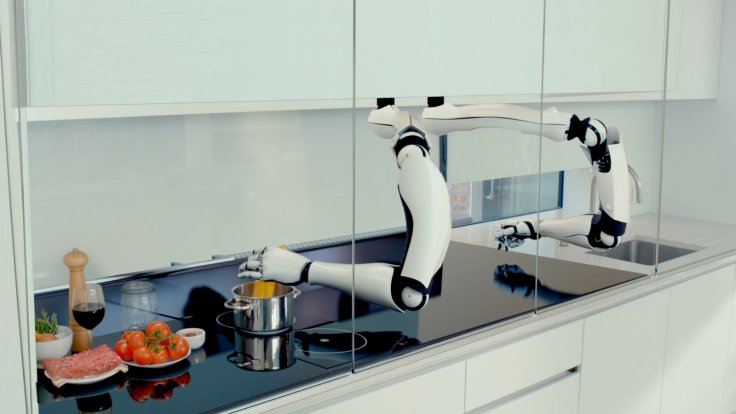







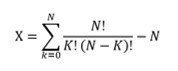







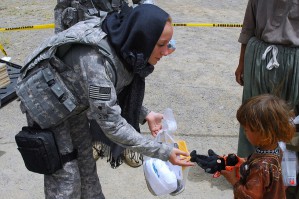

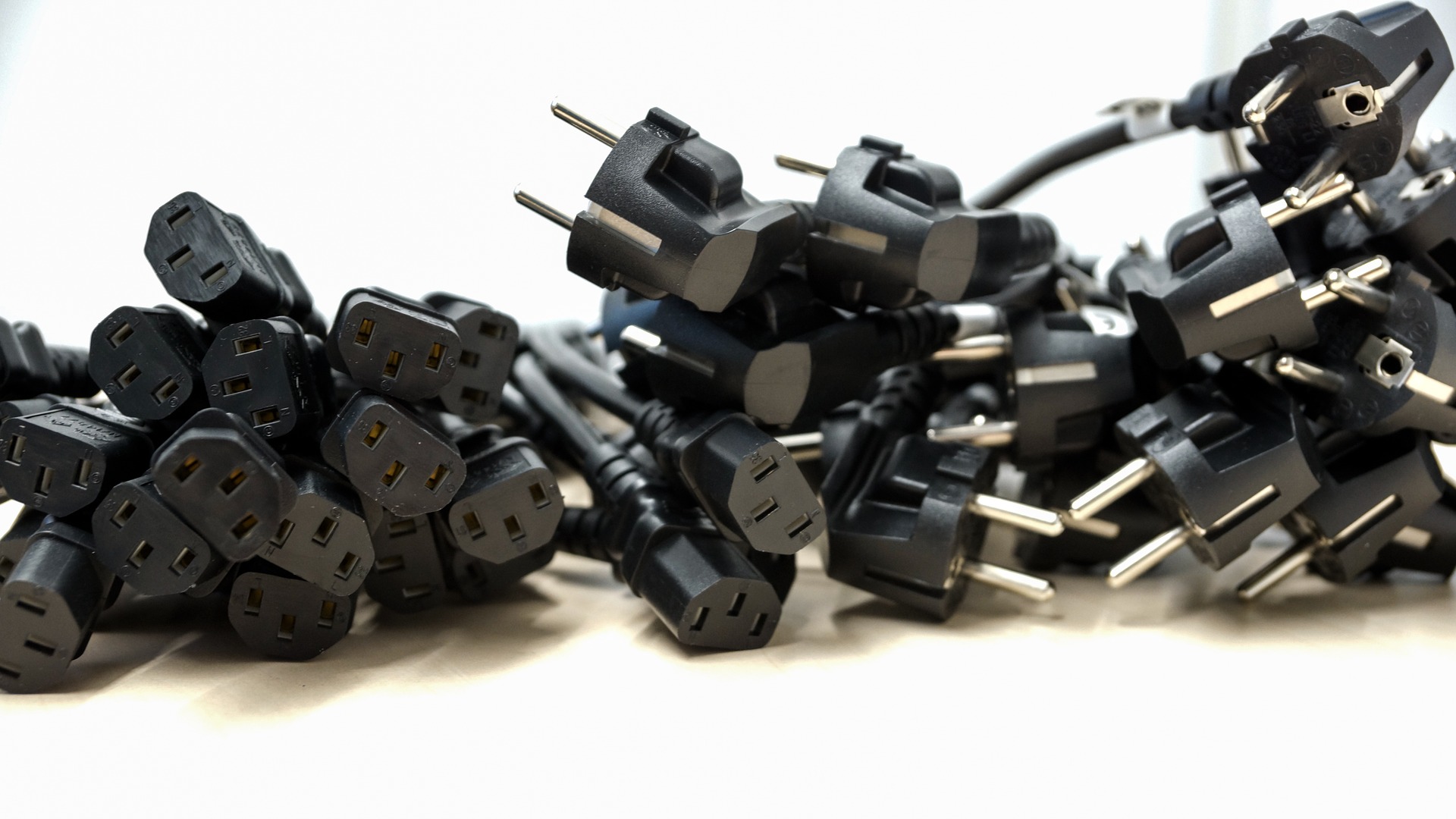

 Curating the Future